
How Sleep Apnea and Poor Sleep Crush Testosterone Levels
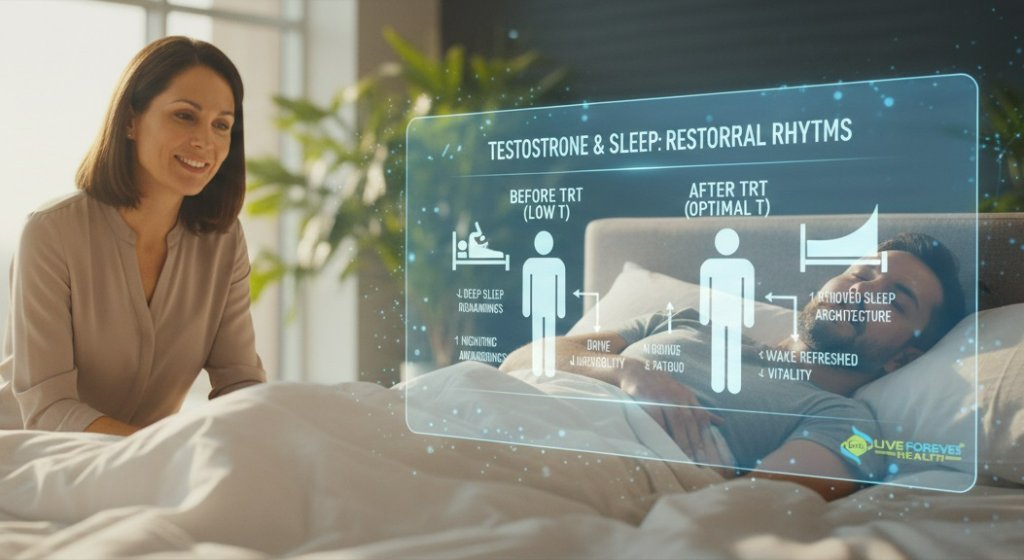
Testosterone production and sleep quality are locked in a powerful bidirectional relationship. Testosterone peaks during Slow-Wave Sleep (SWS/deep sleep) when the HPG axis maximally pulses LH to stimulate testicular T production. Just one week of restricted sleep (5 hours/night) reduces testosterone by 10–15% in healthy young men. Obstructive Sleep Apnea (OSA) — the most common and severe sleep-related testosterone disruptor — crushes T through two mechanisms: (1) constant fragmentation of deep sleep prevents the HPG axis from completing its overnight T production cycle; (2) repeated oxygen deprivation (hypoxia) during apnea events directly damages Leydig cells in the testes. OSA creates a deadly reinforcing loop: Low T → fat accumulation (especially abdominal) → increased neck circumference and airway pressure → worsens OSA → further suppresses T. Low T also steals sleep quality through anxiety and irritability (preventing sleep onset), night sweats (fragmenting sleep), reduced daytime activity (diminishing homeostatic sleep drive), and joint pain. Treatment hierarchy: For men with confirmed OSA, CPAP therapy must be the first intervention — consistent CPAP use has been shown to restore T levels significantly by normalizing deep sleep. For Low T without OSA, TRT improves sleep indirectly by eliminating the hormonal symptoms that interfere with sleep onset and quality. Important caution: TRT can potentially worsen undiagnosed sleep apnea in susceptible individuals — OSA screening should be performed before initiating TRT in men with high BMI or snoring.
Table of Content
- Introduction: The Fatigue Epidemic and the Missing Link
- The Science: Why Sleep Makes T
- The Major Threat: Obstructive Sleep Apnea (OSA)
- How Low T Steals Your Sleep
- Treatment 1: Breaking the OSA Cycle with CPAP
- Treatment 2: Can TRT Be the Solution for Better Sleep?
- Key Lifestyle Actions: Prioritizing Sleep Hygiene
Introduction: The Fatigue Epidemic and the Missing Link
In modern society, persistent fatigue has become a badge of honor for many men—a sign of working hard and staying busy. Yet, for an increasing number, this chronic exhaustion, coupled with low mood and poor focus, is not merely a consequence of a busy schedule. It is a symptom of a hidden physiological crisis: hormonal imbalance driven by poor sleep.
The Critical Link: Why Sleep is Non-Negotiable for Testosterone Production
Testosterone production is not a steady, 24-hour process. It is tightly regulated by your circadian rhythm, reaching its peak during the deep, restorative phases of sleep. If you consistently short-change your sleep, you are, by definition, short-changing your body's ability to produce its vital masculine hormone. Sleep is, therefore, the essential foundation of healthy testosterone levels.
The Vicious Cycle: Sleep Loss > Low T > Health Problems
The relationship between sleep and testosterone is not a one-way street; it's a powerful and often destructive feedback loop:
- 1. Sleep Loss > Low T: Poor or restricted sleep directly suppresses the hormonal signals required for T production.
- 2. Low T > Poor Sleep: The resulting hormonal imbalance contributes to symptoms (like anxiety, mood swings, and general malaise) that make restful sleep difficult.
- 3. The Result: This cycle leads to a host of cascading health issues, including increased fat mass, chronic fatigue, depression, and metabolic dysfunction.
To truly address chronic low energy and the symptoms of hypogonadism, we must understand and fix both sides of this equation—the hormonal deficiency and the sleep deficiency.
The Science: Why Sleep Makes T
To truly grasp the profound impact of sleep on testosterone, we must look at the central control system in the brain that regulates hormone production: the Hypothalamic-Pituitary-Gonadal (HPG) Axis.
The HPG Axis and Pulsatile Release
Testosterone is produced in a pulsed manner, and its primary regulator is housed in the brain:
- The Control Center: The Hypothalamus releases Gonadotropin-Releasing Hormone (GnRH), which signals the Pituitary Gland to release Luteinizing Hormone (LH). LH then travels to the Testes (the Gonadal part of the axis), stimulating them to produce testosterone.
- The Sleep Connection: The pulsatile release of LH is strongly linked to the circadian rhythm and specifically to Slow-Wave Sleep (SWS), also known as deep sleep. Peak LH and subsequent peak testosterone production occur in the early morning hours, coinciding with the longest periods of uninterrupted SWS.
When sleep is consolidated and deep, the HPG axis receives the strong signals it needs to churn out the day's supply of testosterone. Disrupt that sleep, and you directly disrupt the most critical time for T production.
The Cost of Short Sleep
The evidence is clear and alarming: you cannot consistently skimp on sleep and maintain optimal hormone levels.
- The Experimental Data: Studies have demonstrated that even a single week of restricted sleep—limiting healthy young men to five hours of sleep per night—can lead to a 10 to 15 percent drop in total testosterone levels. This decrease can push a man into a medically defined low-T range, even if he was previously healthy.
- The Chronic Effect: Chronic sleep restriction results in a blunted LH signal throughout the day and permanently lowers the baseline level of circulating testosterone, leading to the gradual onset of hypogonadism symptoms like fatigue and low libido.
In simple terms: if you want healthy testosterone levels, you must protect your slow-wave sleep.
The Major Threat: Obstructive Sleep Apnea (OSA)
While simply restricting sleep is damaging to T levels, the most prevalent and detrimental sleep disorder linked to hormonal deficiency is Obstructive Sleep Apnea (OSA). OSA affects millions of men and creates the perfect physiological storm for hypogonadism.
The Mechanism: How Fragmented Sleep and Lack of Oxygen Disrupt the HPG Axis
OSA involves repeated pauses in breathing throughout the night as the airway collapses. This mechanism crushes testosterone production in two primary ways:
- 1. Fragmented Sleep: OSA constantly pulls the patient out of the deep, restorative Slow-Wave Sleep (SWS)—the exact phase needed for peak LH and T production. The HPG axis is never allowed to run its course optimally.
- 2. Oxygen Deprivation (Hypoxia): Each breathing pause leads to a drop in blood oxygen levels. Chronic nocturnal hypoxia is toxic to the testes, which are responsible for T production. Studies suggest that this lack of oxygen can directly impair the Leydig cells, leading to primary testicular failure and subsequent Low T.
The Deadly Loop: OSA > Low T > Weight Gain > Worsening OSA
OSA doesn't just cause Low T; it creates a reinforcing cycle that drives poor health:
- •Low T: The chronic suppression of T leads to reduced energy, increased fatigue, and a loss of muscle mass.
- •Weight Gain: Low T promotes fat accumulation, particularly around the abdomen. Learn more about TRT and weight loss.
- •Worsening OSA: Increased neck circumference and abdominal fat put greater pressure on the airways, increasing the frequency and severity of apneic events.
This deadly loop often traps men in a worsening state of fatigue and hormonal deficiency, making it critical to address the underlying OSA as the first step toward hormonal recovery.
How Low T Steals Your Sleep
The bidirectional nature of the relationship means that while poor sleep is devastating for testosterone production, the resulting Low T can also actively sabotage a man's ability to achieve restful sleep. This creates a challenging cycle of chronic restlessness and fatigue.
Symptom Confusion: How Low T Interferes with Sleep Onset and Quality
Low testosterone doesn't directly cause insomnia in the way a physical pain might, but its associated symptoms create a negative mental and emotional state that is antithetical to restful sleep:
- Anxiety and Mood Disturbances: As discussed in a previous article, Low T can contribute to heightened anxiety, irritability, and depression. These mental states lead to racing thoughts and hyperarousal at night, making it difficult to fall asleep (insomnia) and stay asleep.
- Night Sweats: Hormonal fluctuations, which are common with hypogonadism, can contribute to uncomfortable night sweats. These episodes of overheating and waking up wet are a direct cause of fragmented, non-restorative sleep.
- Reduced Daytime Activity: Low T leads to profound physical and mental fatigue, discouraging men from engaging in sufficient physical activity during the day. A sedentary day translates into a restless night, as the body lacks the physiological drive for deep sleep.
- Increased Pain Perception: Low T is sometimes associated with increased general aches and pains. Discomfort, particularly joint and muscle pain, is a common reason for waking up and struggling to find a comfortable position.
In essence, Low T robs the body of the stability, calm, and physical exhaustion needed for a smooth transition into deep sleep. Correcting the hormonal balance can therefore remove a major barrier to sleeping well.
Treatment 1: Breaking the OSA Cycle with CPAP
Given the strong causal link between Obstructive Sleep Apnea (OSA) and low testosterone, the most immediate and effective way to raise T levels naturally in men with OSA is to treat the underlying sleep disorder.
The Effect of Continuous Positive Airway Pressure (CPAP) on Testosterone
The standard, non-surgical treatment for OSA is the Continuous Positive Airway Pressure (CPAP) machine. This device works by gently blowing pressurized air into the airway, keeping it open and preventing the collapses that lead to hypoxia and sleep fragmentation.
Clinical evidence strongly supports the use of CPAP as a hormonal intervention:
- Measurable T Increase: Numerous studies have shown that consistent, high-adherence use of CPAP therapy leads to a significant and measurable increase in total and free testosterone levels in hypogonadal men with OSA.
- Restoration of Pulsatile Release: By eliminating apnea events and restoring deep, consolidated Slow-Wave Sleep, CPAP allows the HPG axis to resume its normal pulsatile release pattern, effectively "rebooting" the body's natural T production cycle.
- Improved Symptoms: Beyond hormone levels, men using CPAP report a massive reduction in daytime fatigue, which then contributes to increased activity and overall mental well-being—the foundation for sustaining healthier T levels.
In a man diagnosed with both OSA and Low T, treatment for the sleep disorder must always be prioritized. Often, successful CPAP therapy can elevate testosterone levels high enough that supplemental TRT is no longer necessary.
Treatment 2: Can TRT Be the Solution for Better Sleep?
If a man's Low T is confirmed but he does not have Obstructive Sleep Apnea (or if his T levels remain low despite effective OSA treatment), Testosterone Replacement Therapy (TRT) may be considered. While TRT is not a primary sleep aid, it can indirectly and powerfully improve sleep quality by treating the underlying symptoms of hypogonadism.
The Indirect Benefits: TRT Improves Sleep by Reducing Interferences
TRT often leads to better sleep by addressing the symptoms that were originally causing nightly restlessness and fragmentation:
- Mood Stabilization: Optimized testosterone levels reduce anxiety, irritability, and depressive symptoms. A calmer, more stable mind is essential for faster sleep onset and reduced nocturnal awakenings. Learn more about mental health support.
- Reduced Night Sweats: By stabilizing the hormonal fluctuations associated with hypogonadism, TRT can often alleviate or eliminate disruptive night sweats, a common cause of waking.
- Increased Daytime Energy and Activity: By resolving chronic fatigue, TRT empowers the man to exercise and stay active during the day. This creates the necessary homeostatic sleep drive—a physiological need for deep rest—that ensures quality sleep at night.
A Crucial Caution: Testosterone and OSA
It is vital to understand that while TRT improves the symptoms of Low T that interfere with sleep, it carries a potential risk related to the most severe sleep disorder, OSA.
Potential to Worsen OSA: In a small percentage of susceptible individuals, TRT can potentially worsen pre-existing, undiagnosed sleep apnea. Testosterone is a potent anabolic hormone, and it can influence the central respiratory drive and the tone of upper airway muscles. If a patient begins TRT without first screening for or treating severe OSA, their breathing condition could deteriorate.
Key Takeaway: For this reason, physicians should consider screening for OSA (such as with a STOP-BANG questionnaire or a sleep study referral) in any patient with Low T and symptoms like loud snoring, daytime sleepiness, or high BMI before initiating TRT. This ensures that the treatment for Low T does not unintentionally exacerbate a potentially life-threatening breathing condition.
Addressing T Dosing and FAQs
As men consider TRT to resolve the fatigue and mood issues linked to poor sleep, specific questions often arise regarding how dosage and lifestyle choices affect the sleep-testosterone balance.
Does High T Cause Insomnia?
One common concern is that optimizing or even pushing T levels too high might lead to restlessness, over-arousal, or insomnia.
- The Reality: While excessive doses of testosterone (often associated with non-medical use) can lead to mood swings, irritability, and anxiety, which indirectly cause sleep issues, therapeutically optimized TRT generally promotes calmness and stable energy.
- The Estrogen Factor: More often, sleep disturbances, anxiety, or restlessness on TRT are linked to elevated estradiol (E2), the primary female hormone derived from testosterone. High E2 can cause emotional instability and agitation, disrupting sleep. A physician monitors both T and E2 levels to ensure all hormones remain in an optimal, balanced range to promote mental stability and restful sleep.
- Dosing Timing: Injecting or applying testosterone too late in the evening may, in some cases, mimic the natural morning surge and delay the body's natural wind-down process. Most men find better sleep quality when administering their dose earlier in the day.
Key Lifestyle Actions: Prioritizing Sleep Hygiene
No hormone therapy can fully overcome chronically poor habits. If a hormonal deficiency is found and treated, the patient must protect their sleep to maintain both optimal T levels and overall health.
| Action | Why It Works |
|---|---|
| Consistent Schedule | Reinforces the body's circadian rhythm, which the HPG axis relies on for timely T production. |
| Limit Blue Light | Stops the suppression of melatonin (the sleep hormone), ensuring the body is primed for SWS and subsequent T release. |
| Cooler Environment | Reduces the likelihood of night sweats and maintains the core body temperature drop necessary for deep sleep. |
| Avoid Alcohol Before Bed | While it may help you fall asleep, alcohol severely fragments sleep architecture, preventing the deep SWS critical for T production. |
Conclusion: Treat the Whole Man—Why Hormones Matter for Rest and Energy
The relationship between sleep and testosterone is an intertwined cycle where neglecting one immediately compromises the other. For men grappling with chronic fatigue, low mood, and reduced motivation, the search for a solution must lead directly to the bedroom.
You cannot fix Low T without fixing your sleep, and often, you cannot fix your sleep without addressing the symptoms of Low T.
- Sleep is the Foundation: Deep, restorative sleep, particularly the Slow-Wave phase, is the body's time-locked signal to produce its highest levels of testosterone. Chronic sleep deprivation or fragmentation (especially from OSA) starves the body of this essential hormonal boost.
- The Vicious Cycle: Low T exacerbates symptoms like anxiety and night sweats, which, in turn, destroy sleep quality.
- A Dual Solution: For men with confirmed OSA, treatment with CPAP is often the most direct path to restoring natural T levels. For men without OSA, or those with residual symptoms, optimized TRT can resolve the secondary symptoms of hypogonadism, leading to a calmer mind and a body primed for deep rest.
Ready to Break the Cycle of Fatigue? Screen for OSA and Get a Hormone Assessment.
If you are experiencing persistent fatigue, loud snoring, and struggle to maintain motivation, you may be trapped in the Sleep ↔ Testosterone cycle. Simply increasing your coffee intake will not solve this.
The crucial next steps are twofold:
- 1. Screen for Sleep Apnea: Speak to your doctor about testing for OSA, especially if you have high BMI or snore loudly.
- 2. Get a Hormone Assessment: Confirm your testosterone and related hormone levels to determine if a hormonal deficit is contributing to your fatigue and sleep issues.
Don't let undiagnosed hormonal or sleep issues dictate your energy and quality of life. Take action to understand and fix the foundational chemistry of your well-being.
Schedule Your Free ConsultationRelated Articles
How TRT Helps Mood & Depression
Discover the powerful connection between testosterone and mental wellness, including mood stabilization and cognitive benefits.
How TRT Drives Sustainable Weight Loss
Learn how testosterone replacement therapy boosts metabolism, builds muscle, and helps burn stubborn fat.