
How Testosterone Replacement Therapy (TRT) Drives Sustainable Weight Loss in Men
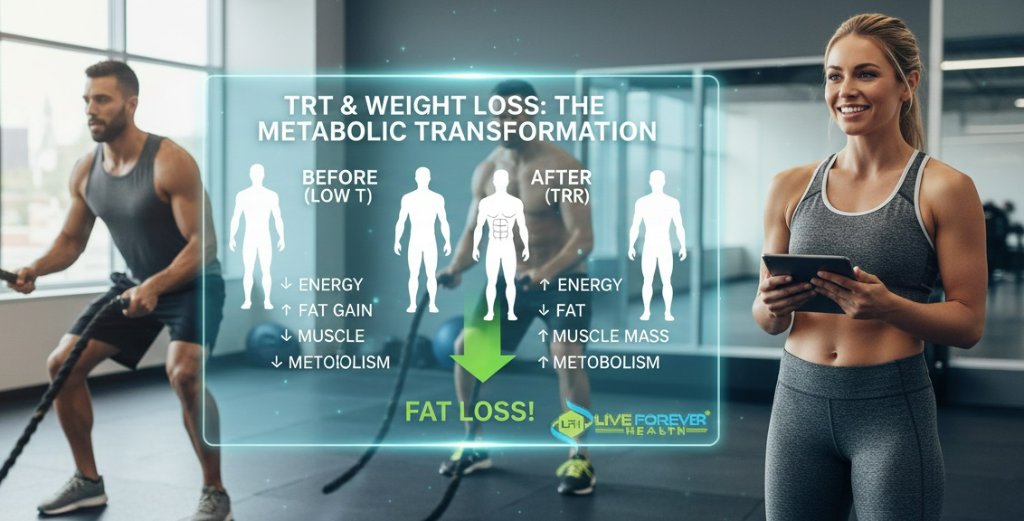
Low testosterone creates a vicious fat-accumulation cycle: Low T → increased fat storage (especially visceral/abdominal fat) → visceral fat contains aromatase enzyme that converts testosterone to estrogen → more estrogen further suppresses T production. TRT breaks this cycle through four key mechanisms: (1) Myogenesis — restores lean muscle mass, elevating Resting Metabolic Rate (RMR) so the body burns more calories at rest; (2) Adipogenesis suppression — TRT inhibits new fat cell formation, particularly visceral fat, reducing waist circumference and lowering metabolic disease risk; (3) Insulin sensitivity improvement — testosterone helps cells process glucose efficiently, reducing fat storage from blood sugar spikes; (4) Appetite regulation — improved mood and reduced stress lowers cortisol-driven cravings and emotional eating. Behavioral benefits include restored energy enabling consistent exercise, reduced chronic stress and cortisol (which promotes abdominal fat storage), and improved motivation for dietary adherence. TRT is not a standalone solution — it facilitates change but requires a calorie deficit through diet and exercise. Important caveats: TRT is a medical treatment for confirmed hypogonadism, not a weight loss drug; fertility is suppressed; hematocrit monitoring is required. Results timeline: Body composition changes begin around months 3–6; maximum fat loss at 12–24 months.
Introduction: Breaking the Vicious Cycle
For many men, the process of weight loss is a frustrating, uphill battle. They work out, they try to eat right, but they consistently hit a wall, often struggling with stubborn belly fat, low motivation, and crushing fatigue.
If this sounds familiar, the problem might not be a lack of willpower—it could be a hormonal imbalance, specifically low testosterone (Low-T).
The Connection Between Low T and Weight Gain: The Vicious Cycle
Testosterone is a metabolic powerhouse. When T levels drop, men often find themselves trapped in a "vicious cycle":
- 1. T-Drop: Testosterone levels fall due to age, poor lifestyle, or other health factors.
- 2. Fat Gain: Lower T signals the body to store more fat, particularly visceral fat (the dangerous fat around the organs), while making it harder to build muscle.
- 3. Worsening Low-T: Fat tissue contains the enzyme aromatase, which converts testosterone into estrogen. More fat means more estrogen, which further suppresses your body's natural T production.
This cycle leaves men feeling tired, unmotivated, and unable to make meaningful progress.
Who This Guide Is For
This guide is for men who are:
- Struggling to lose weight or build muscle despite regular diet and exercise.
- Experiencing symptoms of Low-T (fatigue, depression, low libido).
- Considering Testosterone Replacement Therapy (TRT) as a medical approach to boost overall health and metabolic function.
TRT is not a magic diet pill, but when combined with a healthy lifestyle, it can act as the crucial hormonal reset needed to finally break the cycle and make sustainable weight loss achievable.
The Science: TRT's Four Key Weight Loss Mechanisms
Testosterone is anabolic, meaning it is a building hormone. By restoring T levels to a healthy range, TRT fundamentally rewires the body's metabolism and body composition, addressing the root hormonal cause of weight gain.
Here are the four key ways TRT drives sustainable weight loss:
1. Mechanism 1: Building Muscle (Myogenesis)
Lean muscle mass is your body's most effective defense against weight gain. Unlike fat, muscle tissue is metabolically active, burning more calories even when you are at rest (Resting Metabolic Rate or RMR).
- How TRT Helps: Restored testosterone levels promote myogenesis (the formation of muscle tissue). This increase in lean muscle mass directly translates to a higher RMR, turning your body into a more efficient, 24/7 calorie-burning machine.
- The Result: You lose fat faster and maintain a healthy weight easier because your baseline metabolism is elevated.
2. Mechanism 2: Targeting Visceral Fat (Adipogenesis)
Low T is strongly associated with an increase in visceral fat—the dangerous fat stored deep within the abdominal cavity. High levels of T, conversely, inhibit the formation of new fat cells.
- How TRT Helps: TRT suppresses adipogenesis (the process of fat cell creation). Studies consistently show that as men's T levels rise, their waist circumference decreases, indicating a loss of this hazardous visceral fat, which is linked to heart disease and diabetes.
- The Result: A healthier body composition, a smaller waistline, and a reduced risk of metabolic diseases.
3. Mechanism 3: Enhancing Metabolism and Insulin Sensitivity
The body's ability to process carbohydrates and regulate blood sugar is critical for weight management. Low T often leads to insulin resistance, forcing the body to store more energy as fat.
- How TRT Helps: Testosterone therapy has been shown to improve insulin sensitivity. This means your cells can use glucose more effectively, stabilizing blood sugar and decreasing the likelihood that excess energy will be converted and stored as fat.
- The Result: Better energy levels, fewer blood sugar crashes, and a body that prefers to burn energy rather than store it.
4. Mechanism 4: Controlling Hunger & Cravings
The hormones that regulate hunger and satiety (fullness) are complex, but testosterone plays a role in keeping them in check.
- How TRT Helps: While research is ongoing, men with restored T levels often report better control over their appetite and a reduction in stress-related cravings. This may be due to the overall improvement in mood and well-being, which reduces emotional eating, or a direct hormonal effect on appetite regulation.
- The Result: Better adherence to a healthy diet and fewer instances of overeating.
TRT and the Behavioral Boost
Losing weight isn't just about metabolism—it's about adherence. You need the motivation, energy, and mental focus to stick to a routine. This is where TRT offers an essential, often overlooked, benefit.
Improving Energy and Motivation
One of the most immediate and common symptoms of Low-T is crushing, chronic fatigue. If you're too exhausted to get off the couch, maintaining an exercise routine is nearly impossible.
- •The Link to Performance: Restoring testosterone levels significantly boosts energy, stamina, and overall vigor. This gives men the capacity to consistently engage in resistance training and cardiovascular exercise—the two pillars of weight loss.
- •The Psychological Lift: Beyond physical energy, TRT can reignite motivation and a competitive spirit. This shift from lethargy to motivation is often the critical factor that allows men to start and sustain the necessary activity level to burn calories and build muscle.
Reducing Stress and Cortisol
Stress and poor emotional well-being are silent killers of weight loss efforts. Stress triggers the release of the hormone cortisol, which encourages the body to:
- 1. Store fat, especially abdominal fat.
- 2. Increase appetite, often for high-calorie, comfort foods.
- •The Holistic Effect: By improving mood, reducing irritability, and combating the depressive symptoms associated with Low-T, TRT lowers the baseline level of mental and emotional stress.
- •The Hormonal Benefit: This reduction in perceived stress often leads to lower chronic cortisol levels. When cortisol is managed, the body is less inclined to store fat and more likely to respond positively to diet and exercise.
In short, TRT provides the hormonal foundation for a healthy metabolism, while simultaneously delivering the mental and physical fuel needed to consistently execute a successful weight loss program.
Alternatives and Comprehensive Wellness
While TRT can be a powerful tool, it is not a standalone solution. Achieving lasting weight loss and optimal health requires a comprehensive approach that includes lifestyle modifications, regardless of your hormone status. Explore our weight management solutions for more information.
Natural Ways to Boost T for Weight Loss (If TRT is not an option)
If you have sub-optimal T levels but are not a candidate for TRT (or prefer a natural route), you can still leverage these behaviors to support your testosterone and weight loss goals:
- Resistance Training: Lifting heavy weights is the single most effective exercise for naturally increasing testosterone and building metabolism-boosting muscle mass.
- Prioritizing Sleep: Chronic sleep deprivation raises cortisol and lowers T. Aim for 7-9 hours of high-quality sleep nightly to optimize hormonal function.
- Optimize Your Diet: Focus on healthy fats (avocados, nuts), adequate protein, and micronutrients like Zinc and Vitamin D, which are critical precursors to testosterone production.
- Address Your Stress: Implement stress-reducing techniques (meditation, walking) to keep cortisol levels low, minimizing stress-induced fat storage.
Important Considerations and Risks (Disclaimer)
It is crucial to understand that TRT is not a "magic bullet" for weight loss. It is a medical treatment for a diagnosed condition (Hypogonadism).
- It Requires Effort: TRT facilitates change, but sustained fat loss will still depend on maintaining a calorie deficit through proper diet and consistent exercise.
- Potential Risks and Side Effects: As with any medical treatment, TRT has potential side effects. These must be monitored by a physician.
- Fertility: TRT acts as a contraceptive (as discussed in detail in our previous article).
- Cardiovascular: Potential changes in blood thickness (hematocrit) require regular blood work.
- Hormonal: Potential for estrogen elevation and testicular atrophy.
Always seek medical supervision from a specialized physician (such as a Urologist or Endocrinologist) to determine if TRT is right for you and to manage treatment safely.
Conclusion & Next Steps
Testosterone Replacement Therapy, when used properly, offers a metabolic advantage that can help men break free from the cycle of low energy and fat gain. It boosts muscle growth, improves insulin sensitivity, and provides the necessary energy to sustain a healthy lifestyle.
By addressing the root hormonal cause, TRT empowers you to make your diet and exercise efforts finally pay off.
Ready to Unlock Your Metabolism? Schedule a Consultation.
If you are struggling with low energy, stubborn weight gain, and symptoms of Low-T, the first step is to get tested and speak with an expert.
Take control of your health and unlock your full metabolic potential.
Schedule Your Free Consultation