
How TRT Helps Mood & Depression: The Hormonal Link to Mental Well-being
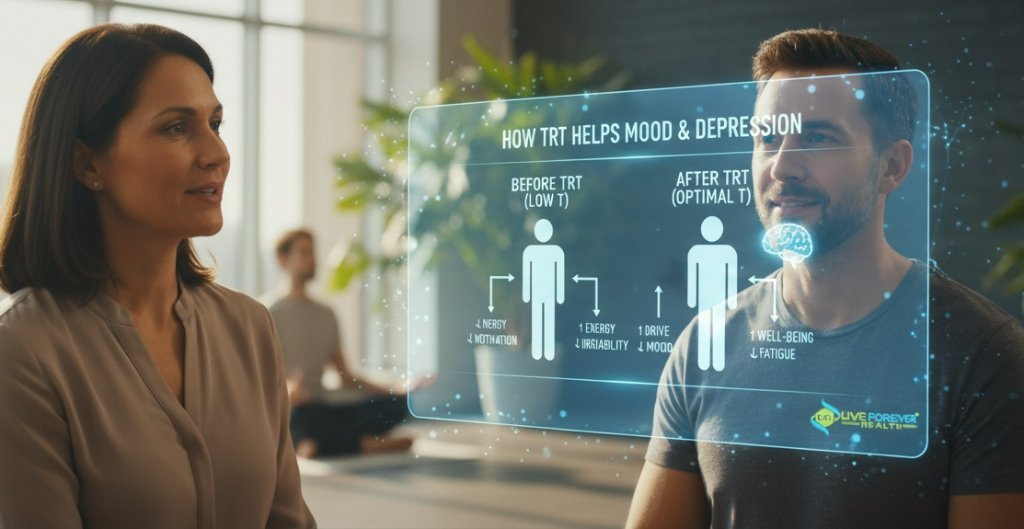
Testosterone is a neuro-hormone that directly communicates with brain receptors, modulating the key neurotransmitters governing mood, motivation, and cognition. When T levels are clinically low, the brain's chemical environment becomes destabilized: Dopamine (reward/motivation) — Low T reduces dopamine signaling, causing persistent apathy, loss of drive, and anhedonia; TRT restores dopamine receptor sensitivity, reviving motivation and the ability to experience pleasure. Serotonin (mood stability) — Testosterone supports serotonin production and uptake — the same system targeted by SSRIs; optimized T contributes to emotional stability and reduced anxiety. GABA (calming) — T influences GABA receptors, producing anti-anxiety, stress-buffering effects. The vicious cycle: Low T → chronic fatigue → physical inactivity and social withdrawal → worsened mood → further suppresses testosterone and motivation. TRT breaks this cycle by providing the physical energy to re-engage with exercise, social connection, and productive activity — all of which are clinically proven antidepressants. Clinical evidence: Studies using the Beck Depression Inventory (BDI) and Aging Male Symptoms (AMS) Scale consistently show significant, measurable improvements in depression scores in hypogonadal men on TRT. Critical distinction: TRT is not a psychiatric treatment — it corrects a hormonal deficiency. If depression persists after T optimization, other causes (MDD, thyroid, sleep apnea, vitamin deficiencies) must be investigated. TRT and antidepressants can be used together as complementary treatments.
Table of Content
- Introduction: The Hormonal Link to Mental Well-being
- The Vicious Cycle: Low T, Energy, and Depression
- The Scientific Foundation: Testosterone's Role in Brain Chemistry
- Quantifying the Change: Evidence from Clinical Studies
- 5 Key Behavioral and Emotional Benefits of TRT
- TRT and Antidepressants: The Combined Approach
- Safety and Practical Considerations
Introduction: The Hormonal Link to Mental Well-being
For too long, conversations about Testosterone Replacement Therapy (TRT) have focused almost exclusively on physical symptoms: boosting libido, building muscle, and increasing physical energy. However, for a significant number of men, the most profound benefits of optimizing testosterone levels are felt in the mind.
When men feel fatigued, unmotivated, and withdrawn, the traditional advice is often centered only on diet, exercise, or mental health intervention. But for men with clinically low testosterone, these mental health struggles are often hormonal in origin.
The Overlooked Symptoms: Low T as a Contributor to Low Mood, Anxiety, and Mental Fog
Testosterone is not just a sexual hormone; it is a critical neuro-hormone that interacts directly with brain receptors. When T levels drop (a condition known as hypogonadism), the symptoms can mirror many mental health disorders:
- •Low Mood and Apathy: A persistent feeling of sadness, lack of interest, or emotional flatness.
- •Anxiety and Irritability: A short fuse, increased worry, or general nervousness.
- •Cognitive Fog: Difficulty concentrating, memory problems, and a general lack of mental sharpness.
These symptoms can be so severe that they are often misdiagnosed as clinical depression, when in fact, they may be a direct result of hormonal deficiency.
The Critical Distinction: TRT is a Hormonal Correction, Not a Standard Psychiatric Treatment
It is essential to clarify the role of TRT:
- TRT is not a substitute for antidepressants or therapy. Depression is a complex illness with many potential causes.
- TRT is a treatment for a physiological hormone deficiency. If Low-T is the primary driver of the mental health symptoms, correcting the hormone level can often resolve the associated mood and cognitive issues.
The goal is to treat the whole man—identifying and correcting the underlying hormonal imbalance to allow for overall mental and physical wellness.
The Vicious Cycle: Low T, Energy, and Depression
The connection between low testosterone and depression is often indirect but incredibly powerful. Low T doesn't just cause a chemical imbalance; it actively depletes the energy and motivation required to live a life that naturally combats depression.
How Fatigue Feeds Low Mood
A man with clinically low testosterone is often caught in a detrimental loop:
- 1. Hormonal Exhaustion: Low T reduces energy and vigor, resulting in pervasive, chronic fatigue that no amount of sleep seems to fix.
- 2. Activity Reduction: The fatigue makes exercise, social interaction, and pursuing hobbies feel impossible. The man becomes sedentary and withdrawn.
- 3. Mood Deterioration: Reduced physical activity, lack of sunlight, and social isolation are powerful drivers of low mood, anxiety, and apathy.
- 4. Worsening Symptoms: This low mood further exacerbates the feelings of low motivation, making it even harder to exercise or eat well, which further suppresses T levels (as we discussed in the weight loss article).
TRT breaks this cycle by injecting the system with energy and motivation, providing the physical capacity for a man to re-engage with the activities—like exercise and work—that are crucial for restoring mental well-being and a sense of self-worth. It removes the underlying physiological barrier to living a healthier, more active life.
The Scientific Foundation: Testosterone's Role in Brain Chemistry
To understand why TRT can be so effective for mood, we must look beyond the physical and examine how testosterone directly communicates with the brain. The brain is rich with testosterone receptors, and when the hormone is optimized, it has a profound effect on the chemicals that govern emotion, reward, and focus.
Mechanism 1: Neurotransmitter Modulation
Testosterone acts as a modulator for the brain's key signaling chemicals, directly affecting mood and emotional stability:
- Dopamine (Reward and Motivation): Low T is linked to decreased dopamine activity. By restoring T levels, TRT often increases dopamine signaling, which translates into improved motivation, vigor, and the ability to experience pleasure (reducing apathy).
- Serotonin (Mood Stability): Testosterone can influence the production and uptake of serotonin, the primary neurotransmitter targeted by many conventional antidepressants. Optimized T levels contribute to greater emotional stability and a reduction in feelings of anxiety and sadness.
- GABA (Calming): By influencing GABA receptors, testosterone can have a calming, anti-anxiety effect, contributing to overall emotional regulation and reduced irritability.
Mechanism 2: Cognitive Function and Neuroprotection
The benefits of TRT extend beyond simple mood improvement into the realm of mental acuity and neurological health.
- Improved Executive Function: Studies have shown that correcting Low T can lead to improvements in focus, concentration, and problem-solving skills—the core elements of executive function. This helps men feel more competent and effective in their work and daily lives.
- Neuroprotection: Testosterone is believed to have neuroprotective properties, potentially supporting the health and structure of neurons. While more research is needed, this suggests a long-term benefit for cognitive resilience.
By acting on these vital neural pathways, TRT provides the necessary chemical foundation for a clearer, more positive, and more focused mental state.
Quantifying the Change: Evidence from Clinical Studies
While anecdotal evidence is powerful, the most compelling support for using TRT to treat mood and cognitive issues comes from quantifiable clinical research. Medical practitioners use standardized tools to measure a patient's emotional state before and after starting therapy.
Quantifying Improvement in Mood
Numerous studies on men with Testosterone Deficiency Syndrome (TDS) have tracked mood changes using established psychological questionnaires:
- Beck Depression Inventory (BDI): This is one of the most widely used self-report measures for assessing the severity of depression. Clinical trials frequently show that men on TRT experience a measurable and significant decrease in their BDI scores compared to control groups. This indicates a genuine reduction in depressive symptoms.
- Aging Male Symptoms (AMS) Scale: This questionnaire covers various symptoms associated with aging men, including psychological complaints like irritability, nervousness, and low mood. TRT consistently demonstrates improvement across these psychological sub-scores.
The data suggests that for men whose depression is rooted in hormonal imbalance, correcting that imbalance leads to an objective improvement in mental health metrics.
The Cognitive Boost
Beyond simple mood, TRT has shown benefits for the higher-level brain functions grouped under cognition:
- Improved Cognitive Scores: In studies, men with cognitive impairment (often measured using tools like the Korean Mini-Mental State Examination, or K-MMSE) have shown improvement in their scores after receiving TRT compared to those receiving a placebo. This indicates better memory and attention.
- Enhanced Executive Function: Patients often report feeling "mentally sharper" and better able to handle complex tasks, a sign that TRT is positively affecting the frontal lobe's ability to manage focus, planning, and decision-making.
This scientific backing is crucial: it shows that the mental health benefits of TRT are not just subjective feelings of well-being, but verifiable improvements that can be tracked in a clinical setting.
5 Key Behavioral and Emotional Benefits of TRT
The scientific data translates into tangible, life-changing benefits. Here are the most frequently reported emotional and behavioral improvements experienced by men successfully treated with TRT:
1. Reducing Irritability and Emotional Blunting
Low testosterone is commonly associated with being perpetually "on edge" or suffering from emotional blunting (feeling disconnected or numb).
The Benefit: By stabilizing the hormonal environment, TRT helps men regain better control over their emotional responses. They report reduced irritability, fewer "short-fuse" moments, and a return to feeling genuine emotional connection, making relationships easier and more rewarding.
2. Restoring Motivation, Drive, and Vigor
The loss of motivation is often one of the first and most debilitating psychological symptoms of Low T.
The Benefit: Restored T levels directly influence the dopamine pathways (the brain's reward system). This translates into a return of the "drive" needed to set and achieve goals, pursue ambitions, and simply look forward to the day—reclaiming the sense of masculine vigor that was lost.
3. Addressing Anxiety and General Distress
While anxiety is complex, the physical symptoms of Low T can create a hormonal environment conducive to chronic worry.
The Benefit: For many men, the general feeling of being unwell, fatigued, and mentally sluggish contributes to anxiety. By removing these physical stressors and stabilizing mood neurotransmitters, TRT can significantly lower overall general distress and help the patient manage anxiety more effectively.
4. Breaking the Fatigue-Depression Cycle
The Benefit: The flood of physical energy from TRT enables re-engagement with exercise, hobbies, and social life. Physical activity is a proven antidepressant, and by providing the energy to be active, TRT facilitates a natural, virtuous cycle of improved mood and vitality.
5. Increased Self-Efficacy and Confidence
Ultimately, successful TRT helps a man feel like himself again.
The Benefit: The combined improvements in physical strength, mental clarity, and emotional stability lead to a dramatic boost in self-efficacy (the belief in one's ability to succeed). This foundational confidence is vital for thriving in every aspect of life, from career to personal relationships.
TRT and Antidepressants: The Combined Approach
A common and critical question for men seeking hormonal therapy is how it interacts with existing treatment for depression and anxiety. It is essential for patients and practitioners to understand that TRT and conventional psychiatric medications are not mutually exclusive.
Guidelines for Collaborative Care
TRT and antidepressants (like SSRIs or SNRIs) work on different, yet related, systems in the brain:
- Antidepressants primarily target neurotransmitter regulation (like serotonin and norepinephrine) to chemically stabilize mood.
- TRT primarily targets the hormonal foundation that provides the raw material for energy, motivation, and neural function.
For a patient with both a diagnosed mood disorder and clinically low testosterone, a collaborative care model is often the most effective strategy:
- TRT may enhance efficacy: By treating the underlying fatigue and apathy caused by Low T, TRT may allow psychotropic medications to work more effectively, as the patient now has the energy and drive to participate in therapy or stick to a recovery plan.
- Symptom Clarification: Optimizing testosterone can clarify the true cause of the symptoms. If depression significantly improves after TRT, the hormonal issue was a major contributor. If residual depression remains, the focus can shift to adjusting antidepressant medication or exploring psychotherapy.
Crucially, patients should never stop, start, or change their existing antidepressant regimen without the direct supervision of their psychiatrist or prescribing physician.
Safety and Practical Considerations (Risks and Candidate Screening)
While TRT offers substantial benefits for mood and cognition, it is a medical intervention that requires rigorous screening and continuous monitoring. A responsible discussion of TRT must always address the potential downsides and identify who is an appropriate candidate.
Risks to Watch For
While mood stabilization is a major benefit, TRT can, in some cases, lead to mood-related side effects, particularly if not properly dosed or monitored:
- Can TRT make anxiety or aggression worse? This is a key concern. If testosterone levels rise too high too quickly, or if the testosterone rapidly converts into high levels of estradiol (estrogen), some men may experience increased irritability, mood swings, or anxiety. This underscores the need for regular blood work to keep hormones within an optimal, stable range.
- Mood Swings from Peak/Trough Levels: Fluctuations between peak hormone levels (right after an injection or topical application) and trough levels (just before the next dose) can sometimes cause emotional instability. Adjusting the dosing frequency is often necessary to maintain an even, stable mood.
- Other Common Hormonal Side Effects: As detailed in previous articles, side effects include potential changes in blood thickness (hematocrit), risks to fertility, and sleep apnea (which itself contributes to fatigue and depression).
Am I a Candidate for TRT?
TRT is not a treatment for depression; it is a treatment for Testosterone Deficiency Syndrome (TDS). Therefore, qualification requires more than just symptoms of low mood:
- Diagnostic Workup: A man must undergo a comprehensive physical exam and lab work to confirm low testosterone levels (usually confirmed by two morning blood tests showing total T below a clinical threshold, often 300 ng/dL).
- Rule Out Other Causes: Before prescribing TRT, the physician must screen for other conditions that mimic Low-T symptoms, such as:
- ○ Thyroid dysfunction
- ○ Severe vitamin deficiencies (e.g., Vitamin D, B12)
- ○ Chronic sleep disorders (e.g., sleep apnea, which significantly depresses T levels)
TRT should only be considered after a thorough diagnosis confirms that a hormonal deficit is a likely contributor to the patient's symptoms.
Conclusion: Treat the Whole Man—Why Hormones Matter for Mental Wellness
Testosterone Replacement Therapy is often perceived through the lens of physical performance, but for many men, its greatest power lies in its ability to restore mental wellness. Low testosterone doesn't just reduce muscle mass; it can hijack brain chemistry, leading to a cycle of fatigue, apathy, and mood disturbance that profoundly impacts quality of life.
For men struggling with symptoms like chronic low mood, debilitating fatigue, lack of motivation, and cognitive fog, TRT offers a scientifically validated path to correcting an underlying hormonal deficit.
By restoring optimal T levels, we don't just add muscle; we stabilize neurotransmitters, increase mental focus, and provide the essential energy needed to break the depression-fatigue cycle. In this way, TRT serves as a catalyst, empowering the patient to engage actively in the healthy lifestyle and activities that sustain long-term mental and emotional health.
For those whose mental health struggles feel unresponsive to conventional methods, a hormone assessment may be the missing piece of the puzzle. Explore our comprehensive mental health services to learn more.
Ready for a Mental Health Reset? Schedule a Comprehensive Hormone Assessment Today.
If your depression or lack of drive is accompanied by classic physical symptoms of Low-T (low libido, weight gain, chronic fatigue), the first critical step is to get tested.
Don't let undiagnosed hormonal imbalance dictate your mental well-being. Take the initiative to understand your body's chemistry and unlock your full potential for emotional stability and cognitive sharpness.
Schedule Your Free ConsultationRelated Articles
How TRT Impacts Your Fertility and Sperm Count
Learn about the relationship between TRT and male fertility, plus solutions to preserve reproductive health.
How TRT Drives Sustainable Weight Loss
Discover how testosterone replacement therapy boosts metabolism, builds muscle, and helps burn stubborn fat.