
Revitalizing Vitality: The Science of TRT and Energy Metabolism
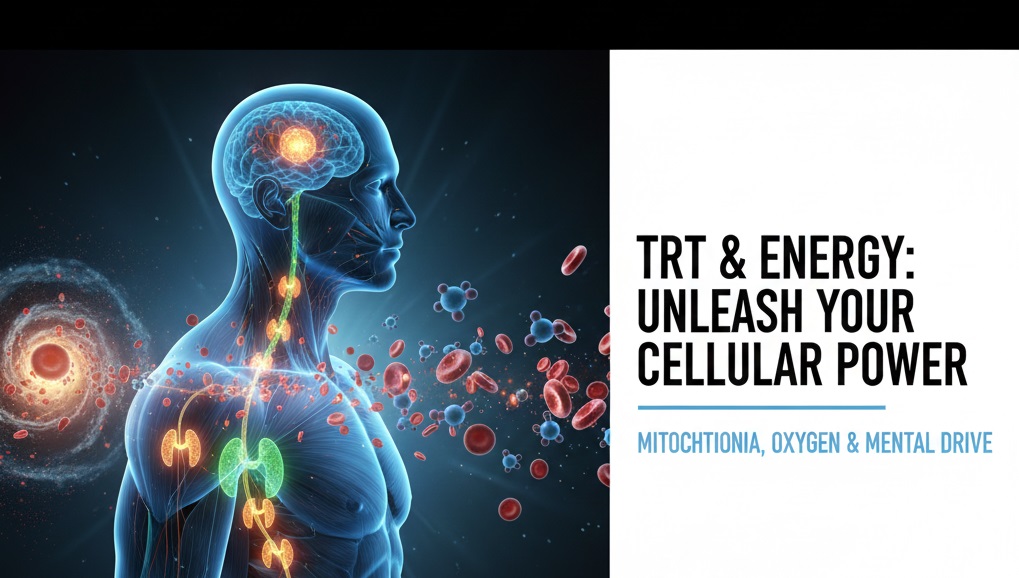
How Testosterone Powers Focus, Physical Stamina & Mental Drive
Testosterone functions as a master metabolic hormone, governing energy production at the cellular, physiological, and neurological levels. Three core mechanisms explain TRT's energy benefits: (1) Mitochondrial Biogenesis — testosterone signals cells to build more mitochondria (cellular 'powerhouses'). Low T results in fewer, less efficient mitochondria and impaired ATP production, creating 'Hypogonadal Fatigue.' TRT rebuilds this cellular energy infrastructure, improving fuel utilization of both glucose and fatty acids. (2) Erythropoiesis (Red Blood Cell Production) — testosterone stimulates bone marrow to produce more red blood cells, increasing the body's oxygen-carrying capacity. Low T leads to sub-clinical anemia; optimized T raises the aerobic threshold for physical stamina and faster recovery. Safety note: erythropoiesis must be monitored via hematocrit/hemoglobin every 3–6 months to prevent polycythemia (blood thickening). (3) Dopamine-Energy Axis — testosterone increases density and sensitivity of dopamine receptors in the brain. Low T reduces dopamine signaling, causing brain fog, inability to initiate tasks, and the 'pushing through mud' feeling. TRT restores mental clarity and 'ambient drive' — not the jittery energy of caffeine but calm, sustained focus. Timeline: initial mental clarity improvements in weeks 1–3; significant physical stamina gains in weeks 4–8; full metabolic optimization by month 3+. Protocol for maximum energy: micro-dosing (smaller, more frequent injections) maintains stable hormone levels, eliminating the 'peak and valley' energy crash common with infrequent large injections. Sleep apnea screening before starting TRT is important, as TRT can occasionally worsen undiagnosed OSA.
Table of Content
- The "Hidden" Engine of Energy
- Setting Realistic Expectations: The Timeline of Recovery
- The Mitochondrial Connection: Mitochondrial Biogenesis
- Physical Stamina: Erythropoiesis and Oxygenation
- Mental Energy: TRT for Brain Fog and Fatigue
- The Best TRT Protocol for Energy and Focus
- Sleep Architecture: Recovery as an Energy Source
Setting Realistic Expectations: The Timeline of Recovery
One of the most frequent questions we encounter is: how long does it take for TRT to help with fatigue? While every biology is unique, the transition typically follows a structured physiological timeline:
| Timeline | What to Expect |
|---|---|
| Weeks 1–3 | Initial improvements in mood and "mental spark" as dopamine receptors become more sensitive |
| Weeks 4–8 | Significant shifts in physical stamina and the disappearance of the late-afternoon energy slump as red blood cell production increases |
| Month 3 and Beyond | Full metabolic optimization, where your body has effectively "retrained" itself to burn fuel more efficiently |
Experiencing Persistent Fatigue or Brain Fog?
Don't settle for stimulants and coffee. Discover if low testosterone is the root cause of your energy drain.
The Mitochondrial Connection: Mitochondrial Biogenesis
To understand why low testosterone causes exhaustion, we have to look inside your cells at the mitochondria—the "powerhouses" responsible for creating ATP (Adenosine Triphosphate), the universal currency of energy.
Building More Engines
Testosterone plays a critical role in mitochondrial biogenesis. This is the biological process by which your cells increase their total number of mitochondria.
The Low-T State
When testosterone is deficient, your mitochondria can become "leaky" and inefficient. You have fewer "engines" under the hood, meaning even simple tasks feel like an uphill climb.
The Optimized State
TRT acts as a signal for the cell to build more—and more efficient—mitochondria. By increasing the density of these powerhouses in your muscles and brain, TRT allows you to produce more energy with less effort.
Fueling the Cell
Beyond just building the engines, testosterone optimizes how they run. It improves the body's ability to shuttle glucose and fatty acids into the mitochondria to be converted into ATP. This is why men on an optimized protocol often find they can maintain higher levels of activity throughout the day without the sudden "bonking" or exhaustion common in a low-testosterone state.
Physical Stamina: Erythropoiesis and Oxygenation
Physical lethargy—that "heavy limb" feeling where even a flight of stairs feels like a marathon—is often a direct result of poor oxygen delivery to the tissues. Testosterone is a primary regulator of the body's ability to transport this vital fuel.
The Oxygen Edge
Testosterone directly stimulates the bone marrow to produce red blood cells through a process called erythropoiesis. Red blood cells are the specialized vehicles that carry oxygen from your lungs to your heart, brain, and working muscles.
The Fatigue Link: When testosterone is low, red blood cell production can lag, leading to a mild, persistent state of "sub-clinical anemia." This means your tissues are essentially gasping for air, resulting in rapid onset of fatigue during physical exertion.
The Aerobic Threshold: By optimizing your levels through TRT, you improve your oxygenation capacity. This increases your aerobic threshold, allowing you to sustain physical activity longer and recover faster between bouts of exertion.
The Safety Protocol: Monitoring Hematocrit
While increasing red blood cells is the secret to the "energy surge" many men feel on TRT, it must be managed with clinical precision. If red blood cell counts become too high (polycythemia), the blood can become viscous.
At Live Forever Health, our medical oversight includes regular monitoring of your hematocrit and hemoglobin levels. This ensures you get the maximum energy benefit of increased oxygen delivery while maintaining a safe, healthy blood profile. We don't just aim for "high" energy; we aim for sustainable, safe performance.
Explore Our TRT Programs
Precision-dosed testosterone therapy designed to optimize your energy, focus, and physical performance.
Learn About Testosterone TherapyMental Energy: TRT for Brain Fog and Fatigue
For many men, the most debilitating part of low testosterone isn't the physical exhaustion—it's the mental "haze." This cognitive sluggishness, or brain fog, is often the first symptom of hormonal decline and the one that most impacts professional productivity.
The Dopamine-Energy Axis
Testosterone is a potent modulator of the brain's reward and motivation centers. It increases the density and sensitivity of dopamine receptors.
💡 Dopamine is the "Drive" Hormone
It provides the "mental energy" required to initiate tasks, solve complex problems, and maintain executive function.
⚠️ The "Fog" Mechanism
When T-levels are low, dopamine signaling falters. This leads to a lack of "get-up-and-go," decreased concentration, and the feeling that you are "pushing through mud" just to get through a workday.
Restoring Focus
When we address brain fog and fatigue via TRT, the result isn't a "jittery" energy like you get from caffeine. Instead, it is a restoration of mental clarity and "ambient" drive. Patients often report that the "mental friction" of starting their day disappears, replaced by a calm, focused ability to stay on task.
The Best TRT Protocol for Energy and Focus
Achieving peak vitality requires more than just a standard prescription. Many conventional clinics use a "one-size-fits-all" approach—often involving large, infrequent injections—that leads to a "peak and valley" effect. This hormonal roller coaster causes energy to spike for forty-eight hours and then crash into exhaustion before the next dose.
Precision Dosing for Stable Stamina
The best TRT protocol for energy and focus is one that mimics the body's natural rhythm. At Live Forever Health, we prioritize Micro-Dosing. By administering smaller, more frequent doses, we maintain a steady state of testosterone in the bloodstream.
Eliminating the Crash
Stable levels prevent the sudden dip in energy and the "brain fog" that occurs when hormone levels fluctuate wildly.
Estrogen Management
Frequent dosing naturally minimizes the "aromatization" (conversion) of testosterone into estrogen, preventing the lethargy and water retention often associated with poorly managed protocols.
The 2000+ Biomarker Map: Fixing "Energy Leaks"
Testosterone does not work in a vacuum. To maximize the "energy surge" of TRT, your internal environment must be optimized. Our comprehensive analysis looks for secondary "energy leaks" that testosterone alone cannot fix:
Thyroid Function
If your thyroid is sluggish, even the best TRT protocol will feel like it's running on a low battery.
Vitamin D & B-Vitamins
Essential co-factors for the mitochondrial biogenesis discussed earlier.
Iron & Ferritin
Essential for red blood cells to effectively carry oxygen to your brain.
The Live Forever Health Advantage: 100% Online & Doctor-Prescribed
We have streamlined the path to performance. Our protocol is designed for the high-achiever who requires clinical-grade results without the friction of traditional doctors' offices.
🏆 Platinum Integration
For those seeking the ultimate edge, we offer the integration of Peptides (Sermorelin/Ipamorelin). These work synergistically with TRT to improve deep sleep and growth hormone release, ensuring that your daytime energy is backed by superior nighttime recovery.
Sleep Architecture: Recovery as an Energy Source
One of the greatest ironies of hormonal health is that you need deep sleep to produce testosterone, yet you need optimized testosterone to achieve deep, restorative sleep. When your levels are low, your "sleep architecture"—the healthy transition between light, REM, and deep sleep phases—often collapses.
The Recovery Paradox
Low testosterone is frequently linked to fragmented sleep and "early waking," which prevents the body from entering the vital stages of physical and cognitive repair.
The "Reset" Signal
Optimized testosterone levels help stabilize the body's circadian rhythm. This allows for a more efficient "nightly reset," where the brain clears metabolic waste and the muscles undergo repair.
Deep Sleep & Growth Hormone
By reaching deeper stages of sleep, TRT supports the natural release of Growth Hormone, creating a virtuous cycle where you wake up feeling genuinely recharged rather than just "caffeinated."
Safety and Airway Health: Sleep Apnea and TRT
At Live Forever Health, our commitment to safety is paramount. It is a clinical reality that TRT can, in some individuals, exacerbate undiagnosed sleep apnea.
Medical Oversight: This is why we don't just "prescribe and disappear." Our board-certified physicians monitor your symptoms and blood markers to ensure that your protocol is improving your sleep quality rather than hindering it. If sleep apnea is a concern, we guide you through the necessary adjustments to ensure your energy remains high and your airway remains clear.
📚 Related Reading: Testosterone and Sleep Quality
Dive deeper into the bidirectional relationship between testosterone levels and sleep quality, including how sleep apnea affects hormone production.
Read ArticleConclusion: Reclaiming Your Peak Performance
Energy is the fundamental currency of a high-impact life. As we have explored, the transition from exhaustion to vitality is a multi-system process involving mitochondrial biogenesis, improved oxygenation, and a revitalized dopamine-energy axis.
Summary of the Path to Vitality
The difference between surviving the day and dominating it often comes down to a few key biomarkers. You don't have to accept fatigue as your "new normal." Through precision-dosed, doctor-prescribed TRT, you can rebuild your hormonal foundation and reclaim the drive that defines you.
Are You Ready to Stop the Midday Crash?
Experience the "Live Forever Health" difference.
Take control of your energy with a protocol tailored to your unique biology.
Available in All 50 States
Tele-medicine consultations from anywhere
Precision Biomarker Analysis
2000+ biomarkers to identify your energy leaks
100% Online
Doctor-prescribed TRT delivered to your door