
How to Turn Daily Routines into a Personal Wellness Blueprint
Introduction
Your daily routines aren't just habits—they're the foundation of long-term wellness, productivity, and life balance. Yet, many of us struggle with constant busyness, lack of structure, burnout, and minimal self-care.
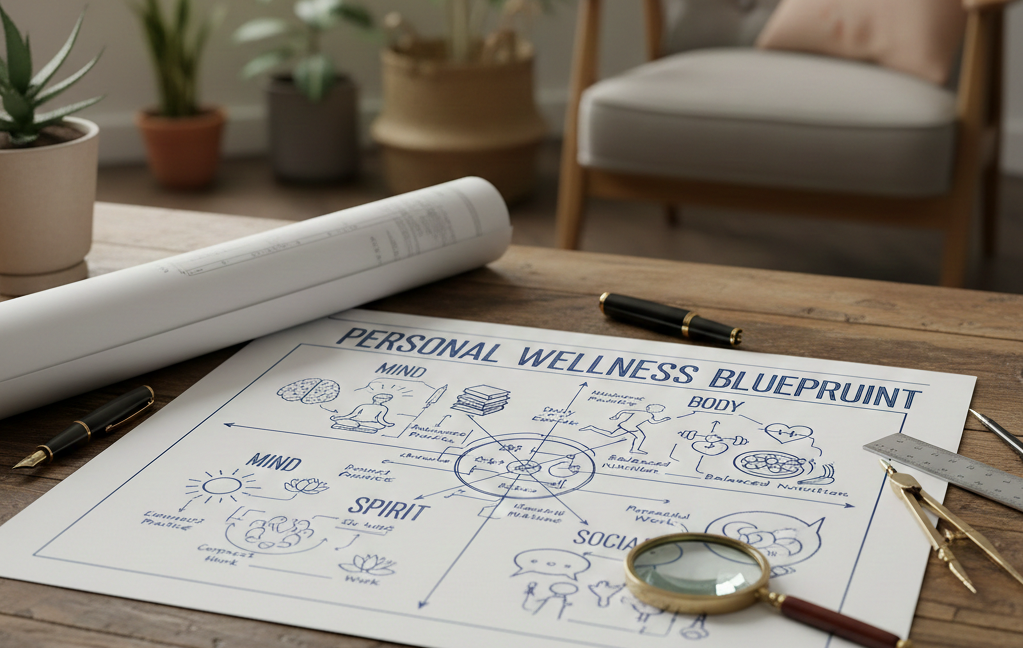
The good news? With an intentional approach, you can design a personal wellness blueprint—a flexible, sustainable daily routine that supports your mind, body, and life goals.
In this guide, we'll walk you through how to craft, implement, and maintain routines that work for morning, midday, and evening, covering mental and physical well-being while keeping it adaptable to your life.
Why Routines Matter – The Case for a Wellness Blueprint
A wellness blueprint is more than a schedule—it's a structured sequence of daily practices that support your health, focus, and long-term goals. Science shows that up to 40% of daily actions are habit-driven, meaning that a supportive routine frees decision-making energy, reduces stress, and preserves cognitive bandwidth (Blue Zones Health+1).
Benefits of a well-designed wellness blueprint:
- Boosts productivity (Asana: morning routines improve focus)
- Enhances mental and physical resilience (Boston University)
- Reduces stress and improves self-care (Aspen Valley Health)
A complete routine touches every key aspect of your life:
- Sleep & rest
- Movement & exercise
- Nourishment & hydration
- Mental focus & mindfulness
- Social connection
- Self-care & reflection
The Four Pillars of Your Daily Wellness Blueprint
Pillar A: Morning Activation
Start your day strong with habits that energize your mind and body.
Key Micro-Habits:
- Sleep + Wake Timing: Consistent schedule improves energy and focus (Asana)
- Hydration: Drink a full glass of water to jumpstart metabolism (Asana+1)
- Mindfulness / Affirmations: 5–10 minutes of meditation, deep breathing, or positive self-talk (Asana)
- Movement: Light stretching or a short mobility routine before leaving bed (Boston University)
- Healthy Breakfast: Nutrient-dense, balanced meals (Aspen Valley Health)
- Daily Priorities: Map out top 3 tasks to guide your focus (Asana)
Pillar B: Midday Momentum & Balance
Avoid the midday slump with intentional habits.
Key Micro-Habits:
- Movement Breaks: Quick walks or stretching sessions (Boston University)
- Hydration & Nutrition: Avoid skipping lunch; drink water consistently (Aspen Valley Health)
- Mini-Breaks & Social Connection: Short downtime or brief social interaction improves focus (Boston University)
- Mindful Eating: Nutrient-dense, purposeful meals (Aspen Valley Health)
Pillar C: Evening Wind-Down & Self-Care
Transition into restorative evening habits to optimize recovery.
Key Micro-Habits:
- Restorative Movement: Light yoga, foam rolling, or stretching (Boston University)
- Digital Detox: Power down devices 30–60 minutes before bed (Boston University)
- Gratitude & Reflection: Journaling or mental reflection on wins (Aspen Valley Health)
- Consistent Sleep Routine: Maintain regular bedtime to optimize circadian rhythm (Asana+1)
Pillar D: Adaptation & Growth – Make It Yours
Your blueprint should evolve with your life.
Key Practices:
- Habit Stacking: Anchor new habits to existing routines (Blue Zones Health+1)
- Start Small: Focus on one or two high-impact habits first (Mental Health America)
- Track Progress: Use visual cues, reminders, or apps
- Reflect & Adjust: Note what works, what doesn't, and modify
- Flexibility: Adapt routines for travel, life changes, or schedule shifts
Step-by-Step Guide to Create Your Personal Blueprint
-
Audit Your Current Routine: Identify what works, what doesn't, and what you want to keep.
-
Define Wellness Goals: Physical, mental, social, and professional outcomes your routine should support.
-
Map Your Day: Divide it into morning, midday, and evening zones.
-
Pick High-Impact Habits: Start with 1–2 per zone.
-
Habit Anchoring: Link new habits to something you already do.
-
Set Cues & Controls: Use time, location, and tools to prompt habits.
-
Track for 21–30 Days: Science shows consistent repetition solidifies habits (Mental Health America).
-
Review Weekly/Bi-Weekly: Identify wins, obstacles, and necessary adjustments.
-
Scale Gradually: Once a habit is stable, add new ones or refine existing routines.
-
Maintenance & Sustainability: Build in flexibility, anticipate disruptions, and embed self-care rituals.
Real-World Examples & Templates
Sample Daily Blueprint:
- Morning: Wake 6:30 AM → hydrate → 10-min breathing/stretch → balanced breakfast → map top tasks
- Midday: 10-min walk after lunch → drink water → 5-min mindfulness → connect with colleague
- Evening: Gentle yoga/foam roll → gratitude journaling → power down screens → sleep by 10:30 PM
Case Study:
Sara, a marketing manager, reduced stress and improved focus by following this blueprint for six weeks. She now reports increased energy, better sleep, and higher productivity.
Tools & Resources:
Habit tracker apps, journaling prompts, water bottles with measurement, guided meditation apps.
Common Pitfalls & How to Overcome Them
1. Lack of Time ⏳
- Challenge: "I don't have time."
- Solution: Tackle this by breaking down desired habits into 5-minute chunks and anchoring them immediately to existing routines (e.g., doing 5 minutes of stretching immediately after brushing your teeth).
2. Schedule Instability ✈️
- Challenge: "I travel / work odd hours."
- Solution: Focus on portable routines. Implement habits that require minimal equipment or location specificity, such as bodyweight exercises or mindfulness practice on-the-go (e.g., during commutes or layovers).
3. Slips and Imperfection 🛑
- Challenge: "I slipped one day."
- Solution: Remember that routine does not equal perfection. The key is to acknowledge the slip and immediately restart the next day without guilt. (Source: Mental Health America)
4. Difficulty Sticking to It 🧲
- Challenge: "My habits don't stick."
- Solution: Strengthen your commitment by deliberately setting up your environment. Use cues, visual reminders, and enlist accountability partners to make the habit automatic and supported.
5. Boredom and Stagnation 🎨
- Challenge: "I feel bored."
- Solution: Inject new life into your routine! Add variety, novelty, or creative self-care activities to keep the process engaging and fun. (Source: Aspen Valley Health)
Why This Blueprint Works – Beyond the Checklist
- Builds Momentum: Small wins compound over time
- Reduces Decision Fatigue: Your routine runs on autopilot
- Full-Person Alignment: Addresses physical, mental, emotional, and social wellness
- Adaptable: You control the blueprint and adjust to life changes
- Sustainable: Focus on process, not perfection
Conclusion & Call to Action
Turning daily routines into a personal wellness blueprint isn't about rigid schedules—it's about intentional practice designed around you.
Start today: Pick one habit from the blueprint and commit for 7 days. Download our checklist/template to guide your journey.
Share your focus: comment below—will you start with morning, midday, or evening habits?
Once you establish your blueprint, you'll have a foundation to enhance well-being, productivity, and life balance—one intentional habit at a time.