
The Midlife Shift: Menopause Weight Gain Explained
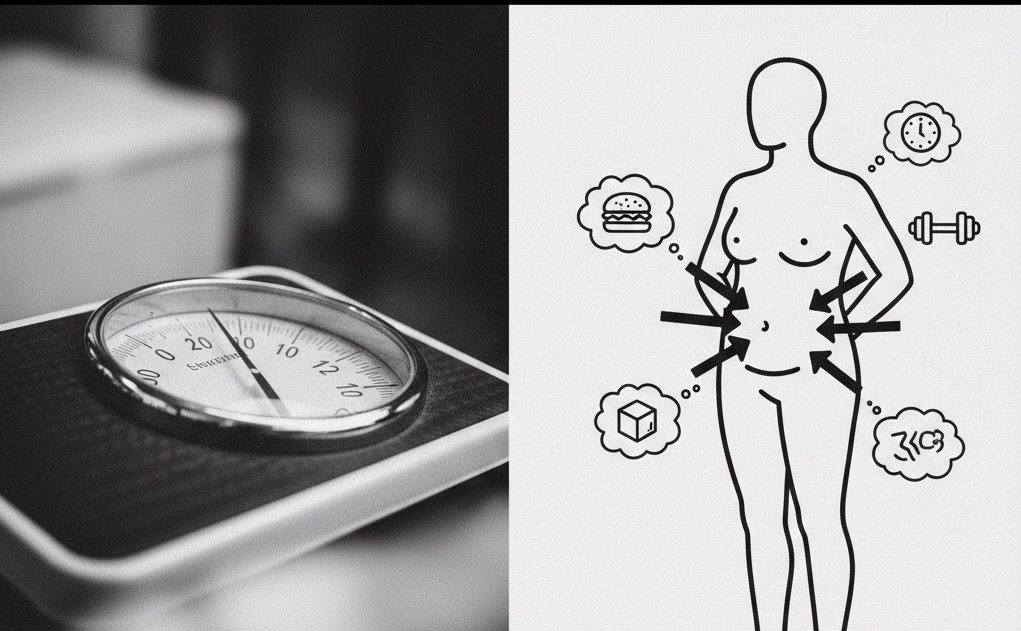
It's not just "aging"—it's a biological pivot. Discover why standard weight-loss advice fails during menopause and what actually works.
Menopause weight gain is driven by four biological shifts, not willpower: (1) Estrogen decline reduces insulin sensitivity, slowing metabolism and shifting fat storage from hips to visceral/abdominal areas; (2) Progesterone drop elevates cortisol, promoting belly fat and disrupting sleep; (3) Sarcopenia (muscle loss) shrinks the metabolic engine—each pound of muscle lost reduces calorie-burning capacity; (4) Sleep disruption spikes ghrelin and drops leptin, driving 300–500 extra calories of cravings daily. Standard calorie-restriction and cardio backfire—excess cardio raises cortisol further. Solution: HRT restores metabolic flexibility; resistance training rebuilds muscle; protein intake should reach 1.2–1.5g/kg bodyweight.
Table of Content
- It's Not Just "Aging"—It's a Biological Pivot
- Key Metabolic Changes During Menopause
- The Estrogen-Insulin Connection
- The "Visceral Shift": Why the Belly?
- The Cortisol Trap: Why Stress Becomes a Weight Gain Trigger
- Sarcopenia: The Hidden Metabolism Killer
- Sleep, Hunger, and the Ghrelin-Leptin Chaos
- The Role of HRT in Weight Management
- The Menopause Weight-Loss Protocol
It's Not Just "Aging"—It's a Biological Pivot
For most women, the transition into perimenopause and menopause is marked by a frustrating phenomenon: the "Menopausal Middle." Even with no changes to diet or exercise, fat begins to redistribute, specifically targeting the visceral (abdominal) area.
Standard weight-loss advice—"eat less, move more"—often fails here because the problem isn't a lack of willpower; it's a fundamental change in metabolic signaling. At Live Forever Health, we view menopause weight gain not as an inevitability, but as a symptom of hormonal dysregulation that can be corrected with precision data and targeted interventions.
Key Metabolic Changes During Menopause
| Factor | Metabolic Impact | Result |
|---|---|---|
| Estrogen Decline | Increased insulin resistance | Higher blood sugar & fat storage |
| Progesterone Drop | Elevated cortisol | Belly fat accumulation |
| Muscle Loss (Sarcopenia) | Reduced metabolic rate | Fewer calories burned at rest |
| Sleep Disruption | Ghrelin/Leptin imbalance | Increased hunger & cravings |
The Estrogen-Insulin Connection
As estrogen levels decline, the body's relationship with insulin shifts. Estrogen is naturally "insulin sensitizing," meaning it helps your cells absorb glucose for energy. When estrogen drops:
- Insulin Resistance Increases: Your body becomes less efficient at processing carbohydrates, leading to higher blood sugar and increased fat storage.
- The Metabolic Slowdown: The loss of estrogen influences the thyroid and basal metabolic rate, meaning you burn fewer calories at rest than you did just five years prior.
The "Visceral Shift": Why the Belly?
In your reproductive years, estrogen directs fat storage to the hips and thighs (subcutaneous fat) to prepare for the energy demands of pregnancy and breastfeeding. As you enter menopause, the "storage director" leaves the building.
The Protective Mechanism of Belly Fat
The body is highly intelligent. When the ovaries stop producing estrogen, the body looks for a secondary source. Adipose (fat) tissue can actually produce a weak form of estrogen called estrone.
- The Body's Logic: Your body begins to accumulate abdominal fat as a "back-up" endocrine organ to maintain a baseline level of estrogen.
- The Danger: Unlike hip fat, abdominal fat is visceral. It wraps around organs and secretes inflammatory cytokines, which further worsens insulin resistance and increases the risk of cardiovascular disease.
Struggling with Menopausal Weight Gain?
Our hormone optimization programs are designed specifically for women navigating menopause. Get personalized support from our medical team.
The Cortisol Trap: Why Stress Becomes a Weight Gain Trigger
In your 20s and 30s, your body had the hormonal resilience to handle high-stress jobs, late nights, and punishing "chronic cardio" sessions. However, during the menopausal transition, the Adrenal Glands are forced to take center stage. As the ovaries wind down, the adrenals become the primary producers of backup hormones. If those glands are already exhausted by chronic stress, your metabolism pays the price.
The Progesterone-Cortisol "Steal"
Progesterone is often the first hormone to drop during perimenopause. Progesterone is a natural "anti-anxiety" hormone that helps keep cortisol in check.
- The Biological Conflict: When you are under stress, your body prioritizes the production of cortisol (the survival hormone) over sex hormones. This "theft" of resources leaves you in a state of high cortisol and low progesterone—a recipe for sleeplessness and rapid weight gain.
- The Midnight Snack Signal: High evening cortisol disrupts sleep and raises blood sugar, leading to intense cravings for salt and sugar the following day.
Why "More Cardio" Often Backfires
Many women respond to menopausal weight gain by increasing their treadmill time and cutting calories further. In the context of low estrogen, this is often the worst possible strategy.
- Adding Fuel to the Fire: Excessive steady-state cardio (like 60 minutes on an elliptical) is a stressor. If your cortisol is already high, this extra stress signals the body to hoard fat for survival, particularly around the midsection.
- Muscle Wasting: High cortisol is catabolic, meaning it breaks down muscle tissue. Since muscle is your primary "metabolic engine," losing it further slows your metabolism, making it even harder to lose weight in the future.
Sleep, Hunger, and the Ghrelin-Leptin Chaos
One of the most distressing symptoms of the menopausal transition is a sudden, uncontrollable shift in appetite. Many women describe feeling "bottomless" or experiencing intense cravings that didn't exist before. This isn't a lack of discipline; it is a direct result of circadian and hormonal misalignment.
The Sleep-Fat Connection
Menopause often brings night sweats and insomnia, largely due to the drop in progesterone (a natural sedative) and the fluctuation of estrogen (which regulates the body's thermostat).
- The Hormonal Fallout: Just one night of disrupted sleep causes a spike in Ghrelin (the "hunger hormone") and a significant drop in Leptin (the "fullness hormone").
- The Result: You wake up the next morning with a biological drive to consume 300–500 more calories than usual, specifically from high-carb, high-fat "energy" foods, as your brain seeks a quick dopamine and glucose hit to compensate for exhaustion.
The Leptin Resistance Trap
As visceral fat increases (the "Menopausal Middle"), it actually secretes leptin. You might think more leptin would mean less hunger, but the opposite occurs.
The Signaling Break: When leptin levels are chronically high due to excess fat, the brain becomes "deaf" to the signal. Your brain thinks you are starving even though you have plenty of stored energy, leading to a slowed metabolism and a constant drive to eat.
The Role of HRT in Weight Management
At Live Forever Health, we view Hormone Replacement Therapy (HRT) not as a "weight loss drug," but as a tool to restore metabolic flexibility. By stabilizing your hormonal foundation, we make the healthy habits (diet and exercise) effective again.
How HRT Supports a Leaner Body
Estrogen Restoration
Replacing estrogen improves insulin sensitivity and helps "redirect" fat storage away from the organs and back to subcutaneous areas.
Progesterone Balance
Bioidentical progesterone improves sleep quality, which in turn lowers cortisol and stabilizes the hunger hormones, ghrelin and leptin.
Testosterone for Women
Small, physiological doses of testosterone can significantly help menopausal women keep their metabolic "engine" (muscle) running hot.
Ready to Take Control of Your Metabolism?
Our comprehensive HRT programs combine bioidentical hormones with nutrition and fitness guidance for lasting results.
Explore Hormone TherapyConclusion: A New Strategy for a New Phase
The weight gain associated with menopause is a complex puzzle involving insulin, cortisol, and muscle loss. The strategy that worked in your 30s—likely centered on restriction—will fail you now. To "Live Forever" in a body that feels like home, you must move from a mindset of depletion to a mindset of optimization.
The Menopause Weight-Loss Protocol
Eat More Protein
Target 1.2–1.5 grams per kg of body weight
Lift Heavy
Replace cardio with resistance training 2x/week
Manage the Light
Prioritize sleep hygiene for hormonal balance
Test, Don't Guess
Use precision blood work for optimization
Frequently Asked Questions
Is menopause weight gain permanent?
No. While your biology has changed, it is entirely possible to lose weight by shifting to a protein-forward, resistance-training-focused lifestyle.
Does HRT cause weight gain?
Actually, most clinical evidence suggests that HRT helps prevent the accumulation of dangerous visceral (belly) fat by improving insulin sensitivity.
Why am I suddenly craving sugar so much?
Dropping estrogen levels and poor sleep drive up ghrelin and cortisol, making your brain crave quick energy sources like sugar.
How much protein do I really need?
Most menopausal women need significantly more than the RDA—aim for 25–30 grams of high-quality protein per meal.
What is the best exercise for menopause?
Strength training. It is the only way to reverse sarcopenia (muscle loss) and keep your metabolism high.
Transform Your Menopausal Journey
Stop fighting your biology. Work with it through science-backed hormone optimization and personalized support.
Available in all 50 states • Telemedicine & In-Person Options