
Managing Menopause Mood Swings
Understand the biological drivers behind emotional volatility and discover proven strategies to regain your emotional stability.
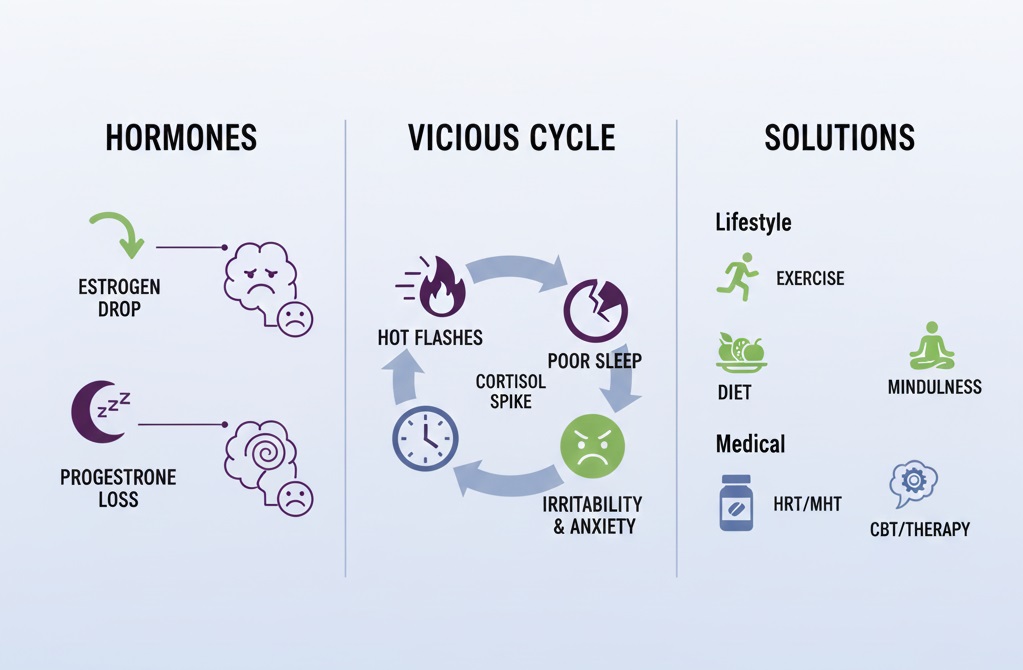
Menopausal mood swings are not simply emotional responses — they are biological symptoms driven by the brain's deep sensitivity to reproductive hormones. Estrogen regulates serotonin (the 'feel-good' neurotransmitter); as estrogen declines and fluctuates erratically during menopause, serotonin function becomes impaired, destabilizing mood and increasing depression risk. Progesterone — which falls first and most dramatically — acts on GABA receptors (the brain's 'brake pedal'), and its deficiency causes heightened anxiety, restlessness, and reduced stress tolerance. These hormonal changes are compounded by a vicious cycle: night sweats and progesterone loss destroy deep sleep → sleep deprivation reduces emotional resilience → hot flashes add physiological stress → life stressors (peak career, aging parents, empty nest) overwhelm a depleted nervous system. The result: irritability, rage, anxiety, panic attacks, brain fog, and increased risk of clinical depression (women with prior MDD or postpartum depression are at significantly higher risk). Treatment framework: (1) HRT — most effective for hormonally-driven mood swings, particularly estrogen (stabilizes drops causing hot flashes and volatility) plus progesterone (directly improves sleep and reduces anxiety when taken at night); (2) CBT — builds coping skills, reframes negative patterns, reduces anxiety and stress reactivity; (3) SSRIs/SNRIs — effective as non-hormonal option for hot flashes and clinical depression; (4) Lifestyle — regular exercise (releases endorphins, raises serotonin), anti-inflammatory diet (reduce sugar/refined carbs), strict sleep hygiene, mindfulness and paced breathing to lower cortisol.
More Than Just Irritability
For many women, the transition into perimenopause and menopause is marked by intense, unpredictable emotional volatility. What begins as minor irritability can escalate into bouts of anxiety, sudden anger, uncontrollable tears, or a persistent low mood.
These Aren't Just "Feelings"
They are powerful biological symptoms driven by fundamental shifts in brain chemistry. Successfully managing menopausal mood swings requires a personalized approach that addresses both the root hormonal cause and the compounding lifestyle factors that intensify the emotional rollercoaster.
The Hormonal Link: Estrogen, Serotonin, and Progesterone
The brain is highly sensitive to reproductive hormones, which act as master regulators for many of your mood-stabilizing chemicals (neurotransmitters).
Estrogen and Serotonin
Estrogen plays a crucial role in regulating serotonin, the primary "feel-good" brain chemical linked to well-being and happiness.
Impact: As estrogen levels decline and fluctuate dramatically during the menopausal transition, serotonin function is impaired, leading to destabilized mood, irritability, and increased risk of depression.
Progesterone and Anxiety
Progesterone is the body's natural calming agent, interacting with GABA receptors (the brain's "brake pedal").
Impact: Since progesterone production drops first and most dramatically (due to anovulatory cycles), women often experience increased anxiety, restlessness, and a diminished ability to cope with stress.
Understanding Your Hormonal Profile
Our comprehensive hormone testing identifies exactly which hormones are imbalanced, allowing for targeted treatment. Learn more about our Hormone Replacement Therapy programs.
Explore Women's Health Programs🌪 The Vicious Cycle: Compounding Factors
Mood swings rarely happen in isolation; they are often intensified by a vicious cycle of physical and emotional menopausal symptoms.
The Triple Threat: Sleep, Stress, and Hot Flashes
Insomnia & Fatigue
Night sweats and loss of calming progesterone destroy deep, restorative sleep. Lack of adequate sleep (less than 7 hours) significantly reduces emotional resilience.
Hot Flashes
Physical discomfort and sudden onset of hot flashes are major stressors. The physiological arousal depletes emotional reserves and exacerbates panic or distress.
Life Stressors
Menopause often coincides with peak career pressure, caring for aging parents, or children leaving home. This creates a perfect storm for emotional overload.
The Cognitive & Emotional Fallout
Irritability and Anger
Often linked to the sudden drops in estrogen and the exhaustion from poor sleep. Minor triggers can lead to disproportionate rage.
Anxiety and Tension
Directly caused by the deficiency in calming progesterone, often manifesting as tension, worry, or even panic attacks.
Low Mood and Depression
Women in perimenopause are significantly more likely to experience clinical depression, especially if they have a history of major depressive disorder or postpartum depression.
⚠️ If low mood is persistent, affects daily functioning, or involves feelings of hopelessness, professional medical intervention is essential.
Breaking the Cycle Starts Here
Our Mental Health & Mood Support programs combine hormone optimization with therapeutic strategies.
Schedule Your Assessment🌱 Pillar III: Lifestyle & Foundational Relief
Before turning to medical solutions, leveraging lifestyle changes can provide a powerful foundation for mood stabilization.
| Strategy | Actionable Benefit for Mood |
|---|---|
| Regular Exercise | Non-Hormonal Mood Boost: Releases endorphins and increases levels of feel-good neurotransmitters (like serotonin and norepinephrine). Aim for 150 minutes of moderate cardio and 2 days of strength training to manage weight and stress. |
| Targeted Diet Adjustments | Stability is Key: Focus on reducing refined sugar, processed foods, and high-carb snacks. These cause blood sugar crashes that mimic and exacerbate mood swings. Increase consumption of Omega-3 Fatty Acids (fatty fish, flaxseed) which are essential for brain health and linked to reduced depression risk. |
| Optimal Sleep Hygiene | Non-Negotiable: Establish a strict, regular bedtime and wake-up time. Keep the room dark and cool (critical for reducing night sweats). Avoid caffeine and alcohol close to bedtime, as they disrupt restorative sleep. |
Stress Management & Mind-Body Practices
The goal here is to reduce the stress hormone cortisol, which directly competes with healthy hormone balance.
Mindfulness & Meditation
Practicing mindfulness helps you observe negative emotions without judgment, preventing the reactive cycle of a full-blown mood swing or "rage."
Yoga and Tai Chi
These combine physical movement with deep, paced breathing, which is a powerful technique for calming the nervous system and reducing acute anxiety.
Paced Breathing
When a mood swing hits, immediately practice slow, deep, abdominal breathing. This signals to the body to exit the "fight or flight" (stress) response.
📚 Learn More About Lifestyle Optimization
Dive deeper into evidence-based lifestyle strategies with our comprehensive guide: The Science Behind Lifestyle Optimization
💊 Pillar IV: Clinical & Therapeutic Solutions
When lifestyle changes are insufficient, targeted clinical treatments offer effective, proven relief.
Menopausal Hormone Therapy (MHT/HRT): The Most Direct Fix
For women with severe mood swings driven primarily by hormone deficiency, Hormone Therapy (Estrogen + Progesterone) is the gold standard:
Estrogen
Stabilizes the erratic drops that cause hot flashes and mood volatility, bringing mood back to a manageable baseline.
Progesterone
Often given via capsule (micronized progesterone) at night, it directly aids sleep and reduces anxiety and irritability.
Ready to explore hormone therapy options?
Learn more about our personalized approach: Functional Medicine Hormone Replacement
Explore HRT ProgramsPsychotherapeutic Support (CBT and Counseling)
Therapy, particularly Cognitive Behavioral Therapy (CBT), is highly recommended for managing the emotional fallout of menopause, even if hormonal symptoms are treated:
Cognitive Behavioral Therapy (CBT)
CBT teaches you coping skills to recognize and reframe negative thought patterns and emotional responses. This helps to manage the stress and anxiety that accompany the physical symptoms.
Antidepressants (SSRIs/SNRIs)
Certain classes of antidepressants (like SSRIs or SNRIs) are effective not only for clinical depression but are also often prescribed at low doses as a non-hormonal option to reduce the frequency and severity of hot flashes, which indirectly improves mood and sleep.
Treatment Options Comparison
| Treatment | Primary Benefits | Best For |
|---|---|---|
| HRT (Hormone Therapy) | Stabilizes hormones, reduces hot flashes, improves mood baseline | Severe mood swings with hot flashes |
| CBT Therapy | Coping skills, reframe negative thoughts, manage stress | Anxiety, emotional reactivity, stress management |
| SSRIs/SNRIs | Non-hormonal hot flash reduction, depression treatment | Clinical depression, HRT contraindications |
| Lifestyle Changes | Exercise, diet, sleep hygiene, stress reduction | Foundation for all treatment plans, mild symptoms |
Reclaiming Your Emotional Stability with Live Forever Health
Menopausal mood swings are a direct cry for help from your brain and body, signaling an imbalance that requires attention. You do not have to endure them in silence.
By addressing the foundational issues—prioritizing sleep, managing external stress, and stabilizing your inner chemistry through informed choices—you can effectively smooth out the emotional turbulence of this natural life stage.
At Live Forever Health, we believe menopause is a transition to be managed, not suffered. Empower yourself by seeking the personalized hormonal and therapeutic support you deserve to live with enduring confidence and emotional stability.
Take the first step today:
Commit to a consistent sleep schedule, and speak with a professional about which targeted strategy—hormonal or non-hormonal—is right for you.
Related Resources & Articles
Perimenopause & Hormone Changes
Understand how progesterone and estrogen shifts drive perimenopausal symptoms.
Understanding Estrogen & Progesterone
Deep dive into the science behind female reproductive hormones.
Hormone Optimization for Women
Comprehensive guide to balancing hormones at every life stage.
Ready to Reclaim Your Emotional Balance?
Our hormone specialists provide comprehensive assessments, personalized treatment plans, and ongoing support for women experiencing menopausal mood swings. Don't suffer in silence—help is available.