
Lifestyle Optimization vs. Biohacking: What's the Real Difference?
From smart sleep hacks to high-tech longevity experiments
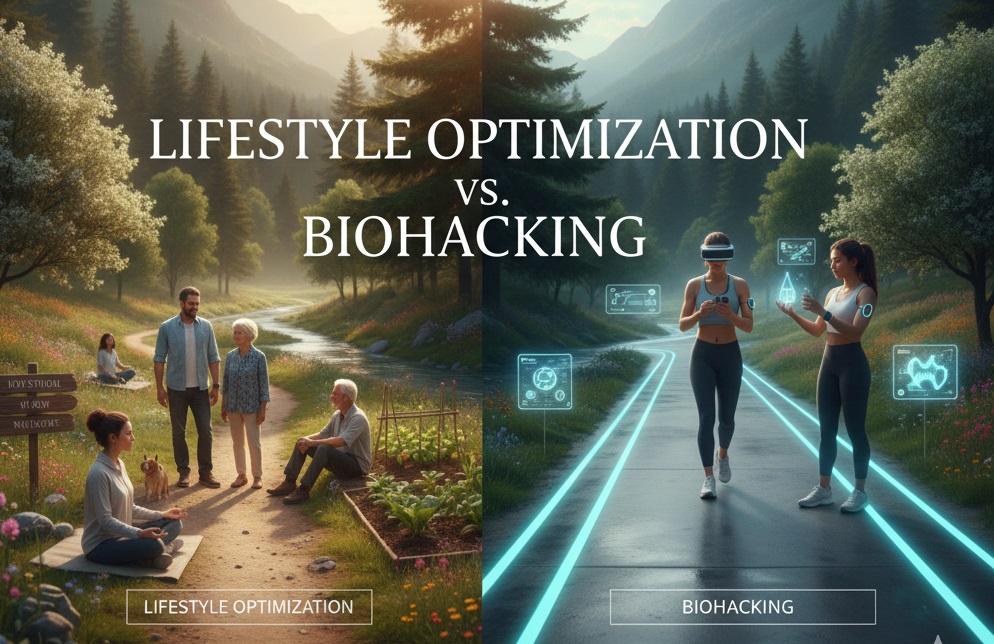
In the world of health, the lines between lifestyle optimization and biohacking can get blurry. One emphasizes structured, evidence-backed routines to enhance daily wellness. The other leans into experimental, self-directed interventions aimed at pushing performance, cognition, or longevity beyond natural baselines.
Understanding the distinctions—and overlaps—can save you from unnecessary risks while helping you maximize results. This guide breaks down the principles, benefits, risks, and best applications of both approaches, giving you actionable insights to make informed decisions for your health journey.
What Is Lifestyle Optimization?
Core Principles
Lifestyle optimization is about incremental, evidence-backed improvements that build sustainable health over time. Key practices include:
- Habit stacking for daily efficiency
- Nutrition planning and balanced diets
- Sleep hygiene and restorative rest
- Regular exercise and stress management
The focus is on healthspan and longevity, not extreme performance. It's safe, repeatable, and suitable for people of all ages.
Examples of Lifestyle Optimization
- Morning and evening wellness routines
- Mindfulness meditation and journaling
- Balanced nutrition, hydration, and physical activity
LFH approach: Personalized health plans that integrate these routines into your daily life, tracking progress to ensure long-term success.
What Is Biohacking?
Core Principles
Biohacking is self-directed experimentation with the goal of enhancing performance, cognition, or longevity, often using:
- Technology (advanced wearables, continuous glucose monitors)
- Supplements or nootropics
- Unconventional interventions (cryotherapy, intermittent fasting)
Reddit Biohacking and Craft Body Scan communities showcase these experiments for human performance and longevity.
Risks and Considerations
Not all biohacks are clinically validated. Potential risks include:
- Unintended side effects
- Long-term health implications
- Misinterpretation of self-experimentation data
Professional consultation is critical before implementing advanced biohacks.
Key Differences Between Lifestyle Optimization and Biohacking
Lifestyle Optimization vs. Biohacking: A Comparison
While both aim for improved health and longevity, Lifestyle Optimization and Biohacking differ significantly in their approach, speed, and risk level.
Goal 🎯
- Lifestyle Optimization focuses on Sustainable health and longevity through long-term well-being.
- Biohacking is centered on Performance enhancement and seeking rapid longevity hacks.
Method and Pace 🏃
- Lifestyle Optimization employs Gradual habit improvements, such as consistent sleep and nutrition changes.
- Biohacking utilizes Rapid self-experimentation and various tech interventions to achieve quick results.
Risk Profile ⚠️
- The risk associated with Lifestyle Optimization is generally Minimal, as it involves simple, well-established practices.
- Biohacking carries a Moderate to high risk due to the nature of self-experimentation and advanced interventions.
Tracking and Data Sources 🔬
- Lifestyle Optimization typically tracks progress using standard tools like Wearables, journaling, and basic clinical tests.
- Biohacking relies on more sophisticated data, including Advanced wearables, complex lab experiments, and detailed biomarker analysis.
Lifestyle optimization is science-backed, safe, and repeatable, while biohacking carries higher risk but potentially faster results.
Population Suitability
- Lifestyle optimization: Safe for all ages, beginner-friendly
- Biohacking: Best for informed, tech-savvy, risk-tolerant adults
Where They Overlap
Both aim to improve health, performance, and longevity. Overlap includes:
- Sleep tracking and optimization
- Nutrition tweaks and supplementation
- Exercise performance monitoring
LFH approach: Integrate biohacking-inspired metrics into safe, evidence-backed lifestyle plans to enhance results without unnecessary risk.
How to Decide Which Path Is Right for You
Assess Your Goals and Risk Tolerance
- Beginners: prioritize safety and sustainability with lifestyle optimization
- High-performance or experimental individuals: may explore biohacking for specific gains
Stepwise Approach
- Establish strong lifestyle foundation: sleep, nutrition, exercise
- Introduce low-risk biohacks: wearable tracking, intermittent fasting
- Advanced experimentation only after building a solid baseline
Tools and Resources for Both Approaches
Lifestyle Optimization Tools:
- Habit trackers, wellness apps, meditation apps, nutrition planners
Biohacking Resources:
- Advanced wearables, CGMs, nootropic tracking, self-experiment journals
LFH tip: Track your baseline metrics before trying experimental interventions to ensure informed decisions.
Conclusion — Integrating Smart Optimization with Cautionary Biohacking
Lifestyle optimization forms the foundation of safe, sustainable health. Biohacking can supplement, but should be approached cautiously, with informed experimentation and metric tracking.
Start with personalized lifestyle optimization plans with Live Forever Health and explore safe biohacking strategies as your health matures.