
Lifestyle Optimization for TRT & HRT Success
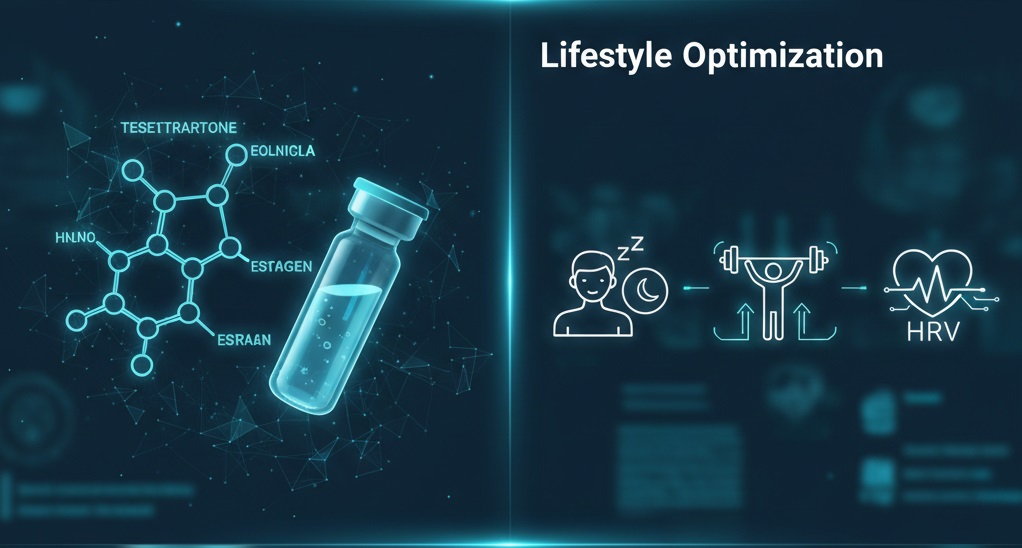
Why Hormones Alone Are Not Enough
TRT and HRT are tools that require the right environment to work. Two patients with identical hormone levels can have vastly different outcomes based on lifestyle. Three non-negotiables: (1) Sleep Architecture — most testosterone and GH signaling occurs during REM; just 5 hours/night drops T by 15%. (2) Micronutrient Density — Zinc, Magnesium, and Vitamin D are required co-factors for hormone synthesis and receptor binding. (3) Stress Management — chronic cortisol triggers the 'Cortisol Steal,' diverting pregnenolone away from sex hormone production and causing androgen receptor resistance. Training tip: prioritize Zone 2 cardio + 2–4 days of compound strength over excessive HIIT, which spikes cortisol and blocks therapy benefits.
Table of Content
- Introduction: Why Hormones Alone Are Not Enough
- The Receptor Reality
- The Three Pillars of the "Multiplier" Effect
- Sleep Architecture: The Secret Anabolic Window
- Metabolic Fueling: Beyond Macros
- Training for Your Hormones: Avoiding the "Cortisol Trap"
- Micronutrient Co-Factors: The "Ignition Switches"
- Nervous System Regulation: The Unseen Hormone Governor
- Data-Informed Lifestyle: Moving Beyond the "Feel"
At Live Forever Health, we often see a "results gap." Two patients can have the exact same hormone blood levels, yet one looks and feels like a professional athlete while the other still struggles with fatigue and soft muscle tone. The difference is not the dose—it is lifestyle optimization.
The Receptor Reality
Hormones are messengers, but they require a "mailbox" to deliver their signal. These are your Androgen or Estrogen Receptors.
The Problem
Chronic lifestyle stressors—such as high cortisol from work or systemic inflammation from ultra-processed foods—can "clog" these mailboxes (receptor downregulation).
The Optimization
Lifestyle optimization is the process of clearing those pathways. When your receptors are sensitive, your body can actually hear the signal the hormones are sending. Without this, you are simply "over-clocking" a broken system with higher doses that eventually lead to side effects.
The Three Pillars of the "Multiplier" Effect
To maximize your HRT or TRT journey in 2026, your lifestyle optimization must focus on three non-negotiables:
Sleep Architecture
Most testosterone and GH signaling happens during REM; without it, the medication's effectiveness is cut in half.
Micronutrient Density
Zinc, Magnesium, and Vitamin D are the "co-factors" that allow hormone synthesis and receptor binding.
Stress Buffer Zones
Lowering systemic cortisol to prevent the "stealing" of hormonal precursors and the antagonism of your treatment.
Sleep Architecture: The Secret Anabolic Window
In 2026, we no longer just talk about "hours" of sleep; we talk about Sleep Architecture. If you are on TRT or HRT, your sleep quality determines how well your body synthesizes protein and repairs tissue.
| Sleep Factor | Impact on TRT/HRT | Optimization Strategy |
|---|---|---|
| Sleep Duration | 15% T drop with only 5hrs/night | Aim for 7-9 hours consistently |
| Temperature | Reduces night sweats (HRT) | Keep room at 18°C (64°F) |
| Blue Light | Disrupts circadian cortisol | 60-min screen-free before bed |
Key Insight: The 15% Drop
Research confirms that even one week of sleeping only 5 hours per night can drop natural testosterone levels by 15%—equivalent to aging 10–15 years. For those on TRT, poor sleep increases cortisol, which directly competes with testosterone for receptor sites.
Metabolic Fueling: Beyond Macros
Lifestyle optimization in the context of hormones means eating for Insulin Sensitivity.
The Protein Floor
To prevent muscle wasting (sarcopenia) and maximize the muscle-building signal of TRT, aim for 1.6g to 2.2g of protein per kg of body weight.
Healthy Fats as Raw Material
Hormones are made from cholesterol. A "low-fat" diet is often the enemy of hormone success. Incorporating avocados, extra virgin olive oil, and omega-3s provides the structural building blocks for your endocrine system.
The Alcohol Tax
Alcohol is a primary "hormone leaker." It increases the conversion of testosterone to estrogen (aromatization) and disrupts the liver's ability to process hormones efficiently.
Training for Your Hormones: Avoiding the "Cortisol Trap"
One of the most common mistakes patients make when starting TRT or HRT is doubling down on high-intensity training without adjusting for recovery. In 2026, we understand that overtraining is actually under-recovering, and it can physically block the benefits of your therapy.
The Cortisol-Testosterone Antagonism
Cortisol (your stress hormone) and Testosterone are physiological rivals. When cortisol remains chronically elevated due to excessive high-intensity interval training (HIIT) or a lack of rest days, it creates a "biological blockade."
The 2026 Training Split: Polarized Recovery
Zone 2 Aerobic Base (80% of Cardio)
Low-intensity steady-state exercise (like brisk walking or light cycling) that keeps the heart rate low. This builds mitochondrial density and flushes out metabolic waste without spiking cortisol.
High-Intensity Strength (2-4 Days)
Focus on heavy, compound movements (squats, deadlifts, presses). These provide the mechanical tension needed to utilize your optimized hormone levels.
The "Deload" Requirement
Every 4–6 weeks, a mandatory reduction in volume (50%) is necessary to allow your central nervous system to catch up with your hormonal output.
Micronutrient Co-Factors: The "Ignition Switches"
Hormones do not work in a vacuum; they require specific minerals and vitamins to function as "co-factors." Think of hormones as the key and micronutrients as the ignition switch.
Zinc & Magnesium
Essential for the conversion of cholesterol into steroid hormones and for maintaining receptor health.
Vitamin D3 + K2
Vitamin D is technically a pro-hormone. Optimization of Vitamin D levels (aiming for 60–80 ng/mL in 2026) is proven to enhance the efficacy of TRT.
Omega-3 Fatty Acids
Critical for maintaining the fluidity of your cell membranes, allowing hormones to pass into the cells more efficiently.
Nervous System Regulation: The Unseen Hormone Governor
In 2026, we've moved past simple "stress management." The new frontier of lifestyle optimization is Nervous System Regulation. If your nervous system is stuck in "Fight or Flight" (Sympathetic), your body views hormone replacement as a secondary priority to survival.
The "Cortisol Steal" and Receptor Resistance
When the nervous system is dysregulated, the body produces high levels of cortisol. This creates two major hurdles for your TRT/HRT protocol:
- •The Pregnenolone Steal: Your body diverts the "mother hormone" (pregnenolone) away from producing sex hormones to create more cortisol instead.
- •Androgen Resistance: Chronic stress induces a state where your cells physically "close their doors" to incoming testosterone or estrogen to prevent over-stimulation during a perceived crisis.
2026 Optimization Tools
Vagal Tone Support
Using cold exposure (face dunking or cold plunges) and specific breathwork (the 4-7-8 method) to "flip the switch" from Sympathetic to Parasympathetic.
Somatic Movement
Incorporating 5–10 minutes of gentle, intuitive movement daily to release "stored" physical tension that keeps cortisol high.
Data-Informed Lifestyle: Moving Beyond the "Feel"
The final pillar of lifestyle optimization in 2026 is Precision Monitoring. We no longer guess if a lifestyle change is working; we use data to prove it.
HRV (Heart Rate Variability)
This is the gold standard for 2026. A high HRV indicates your nervous system is resilient and your TRT/HRT is being well-utilized. A dropping HRV is a signal to pull back on training or increase sleep.
Continuous Glucose Monitoring (CGM)
Even for non-diabetics, monitoring how lifestyle choices (like a late-night snack) spike insulin is crucial. High insulin directly lowers SHBG, which is the "gatekeeper" of your free testosterone.
Taking Ownership of Your Optimization
TRT and HRT are not "magic pills"; they are powerful tools that require a foundation of healthy habits to reach their full potential. By aligning your sleep, nutrition, and training with your clinical protocol, you aren't just replacing what was lost—you are optimizing for a future of peak performance.
At Live Forever Health, we provide the hormones, but you provide the environment. Together, we achieve longevity.
Schedule Your Free ConsultationReady to Optimize Your Hormone Therapy?
Lifestyle optimization is the difference between supplementing a lifestyle and transforming a life.
Book Your Free Consultation TodayRelated Articles
5 Metrics to Track If You Want to Live Forever
Discover the key biomarkers that predict longevity and optimal health.
Testosterone Replacement Therapy
Learn about our comprehensive TRT programs and how they can help you.
Hormone Therapy for Women
Explore personalized HRT solutions designed for women's unique needs.